Broken on Delivery/ Broken on Return
I know something about that.
I was born with VATER syndrome, a constellation of congenital defects that shaped several of my body’s internal systems. Most of the time, my disability is not visible from the outside. But invisibility is not absence. The body systems and functions affected by VATER require daily medical management, private negotiations, hidden maintenance. I pass, until I don’t. I am intact, except where I am not.
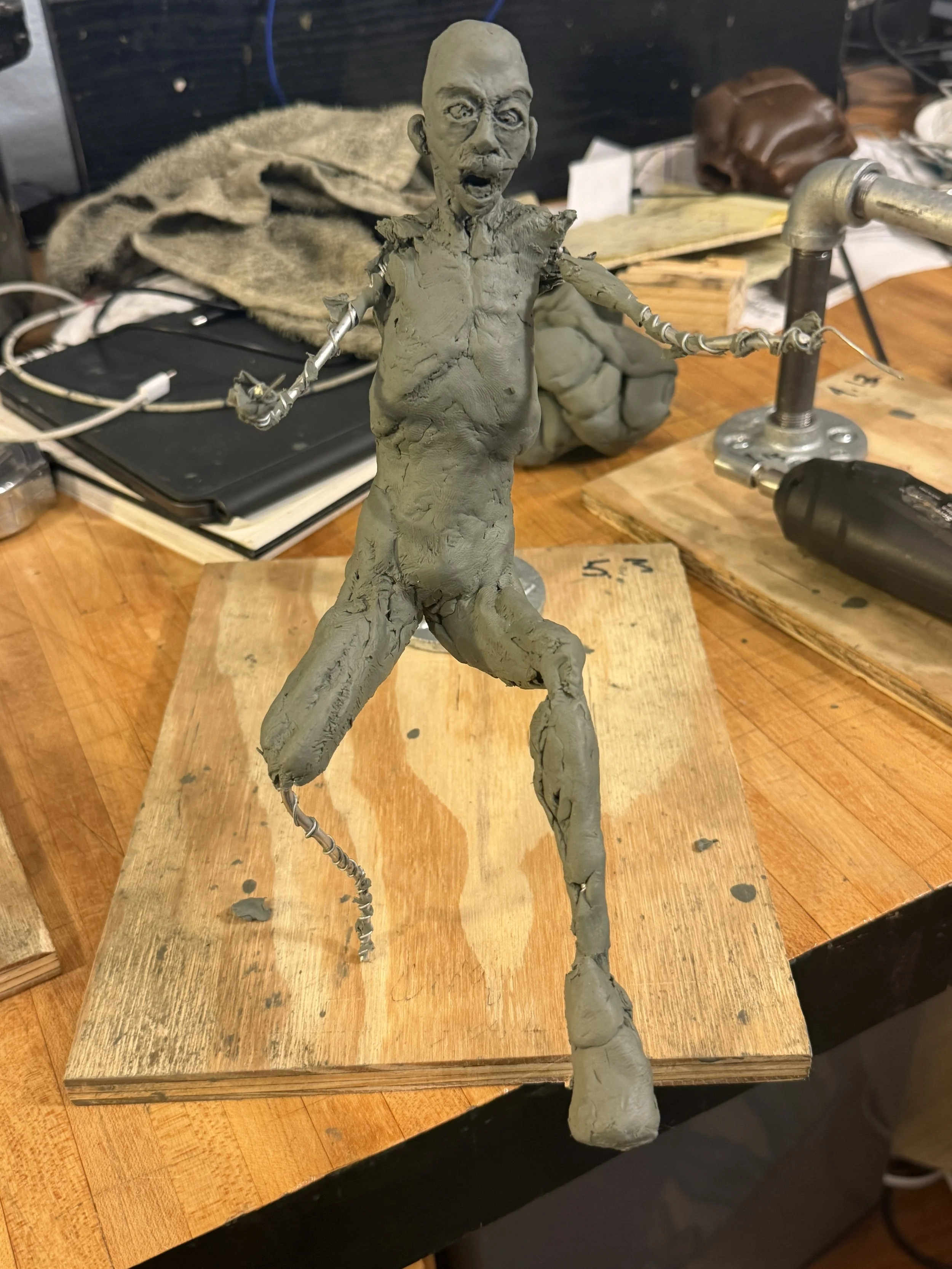
My clay figures were also broken on delivery.
Scroll Map
Prologue
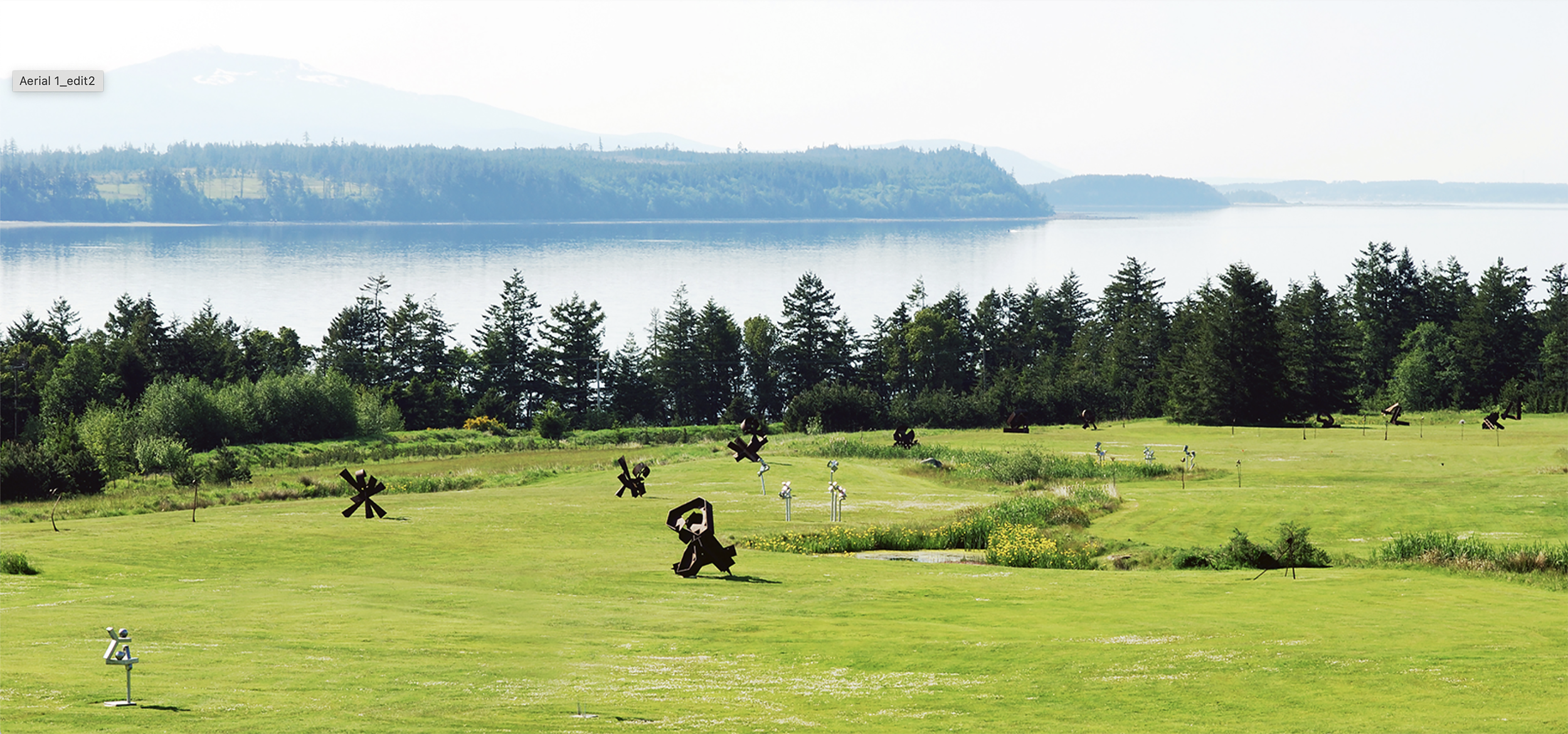
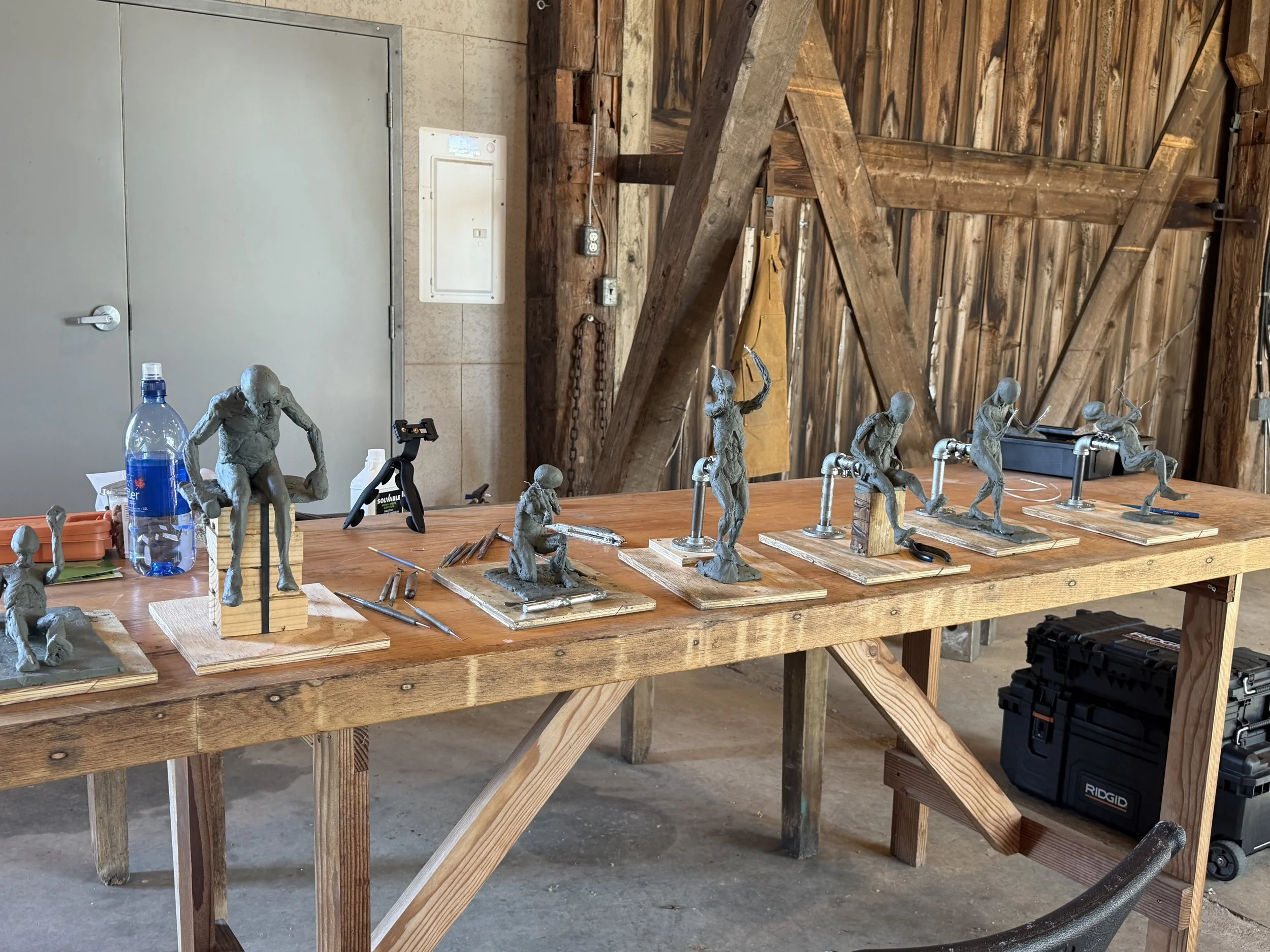
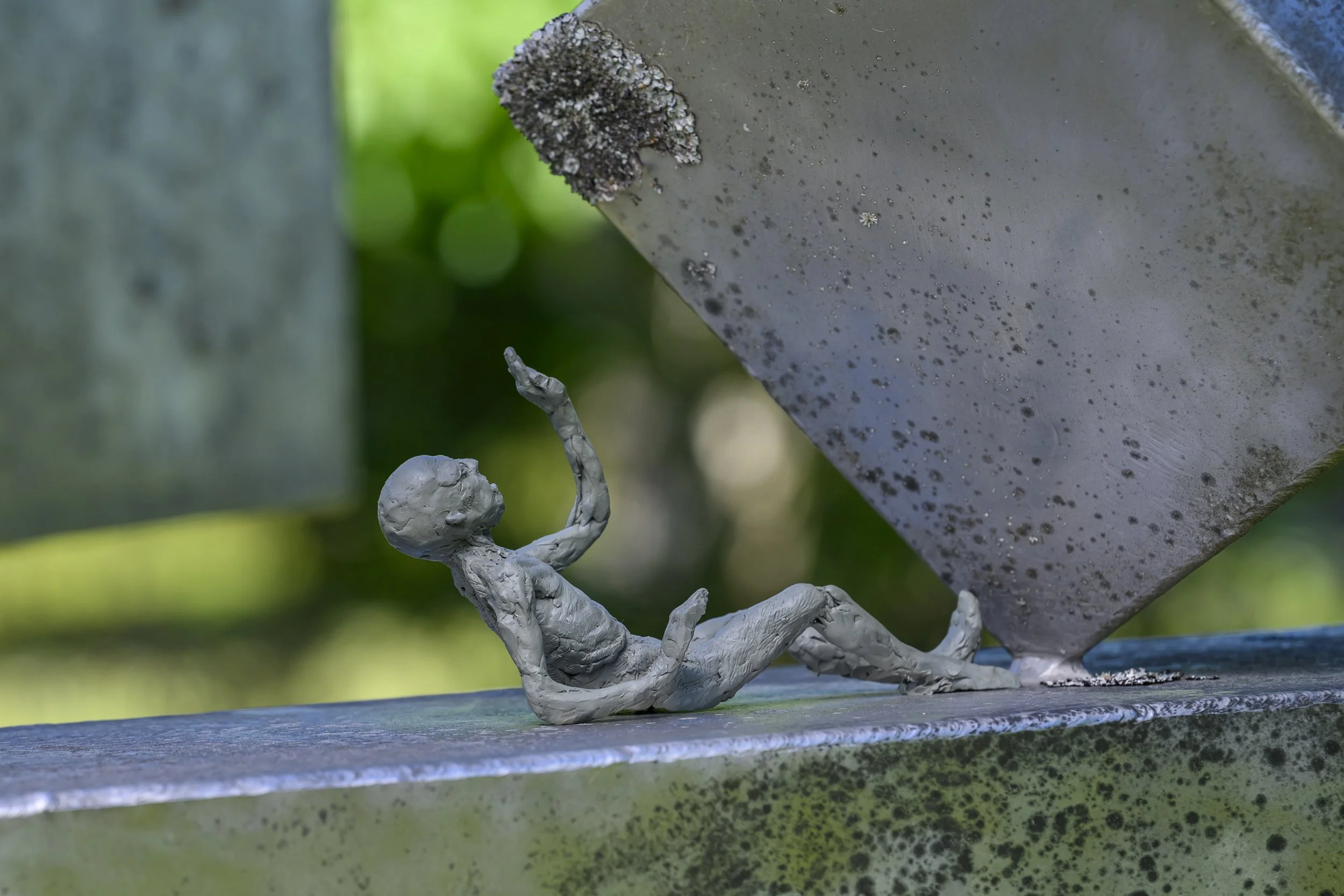
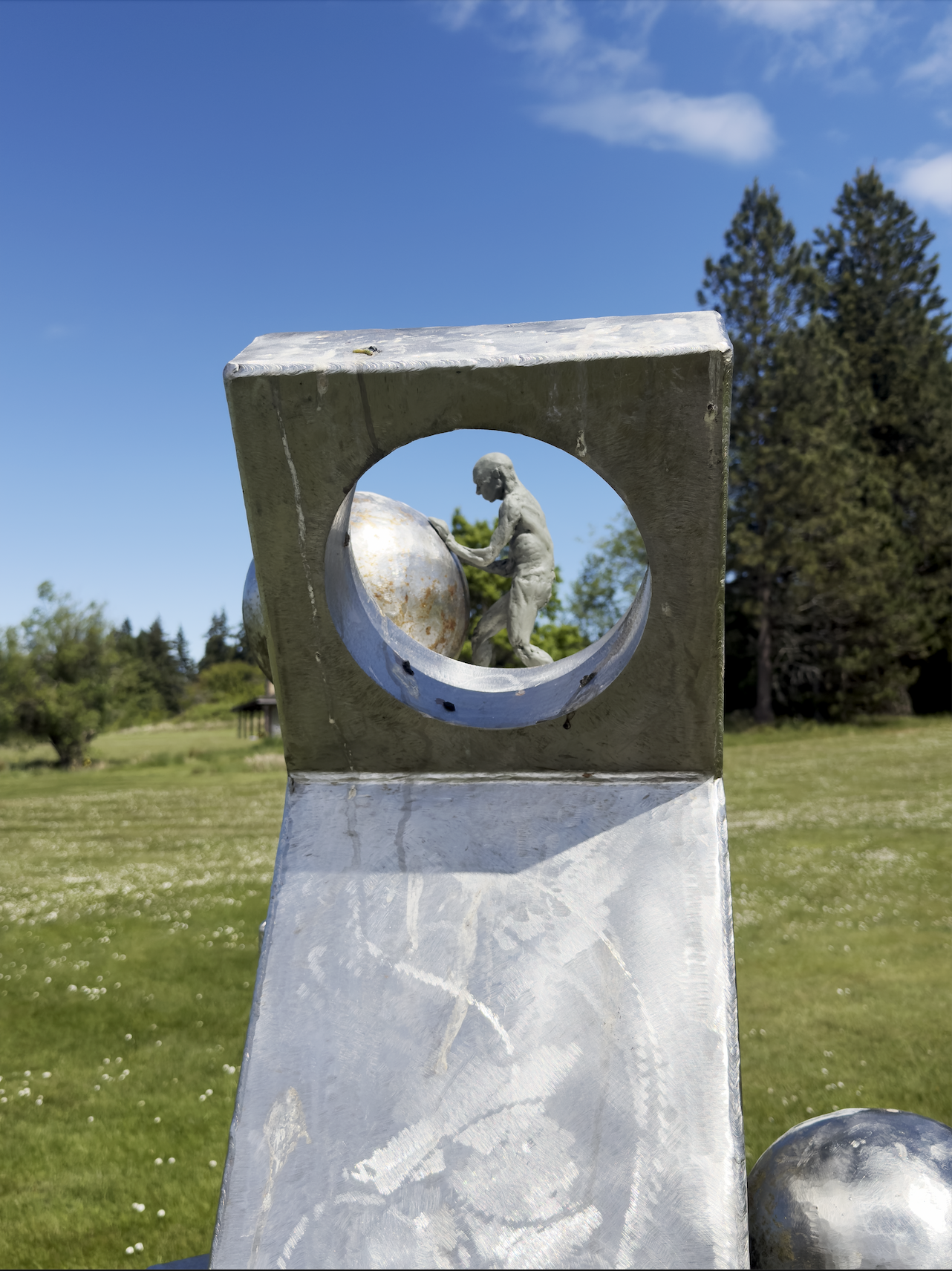
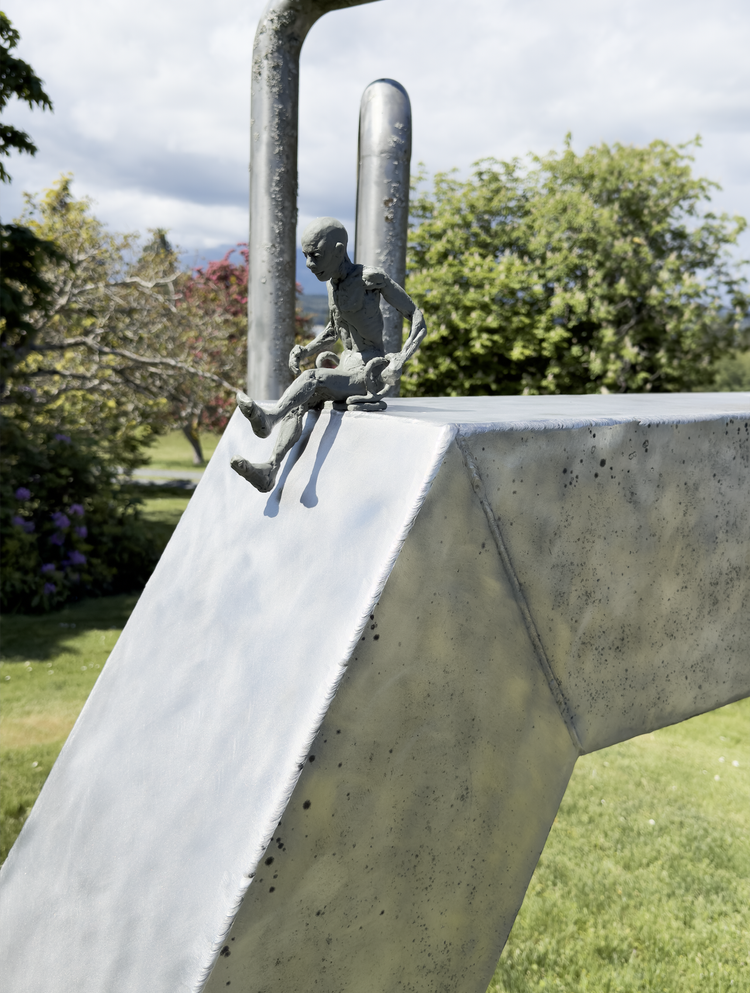
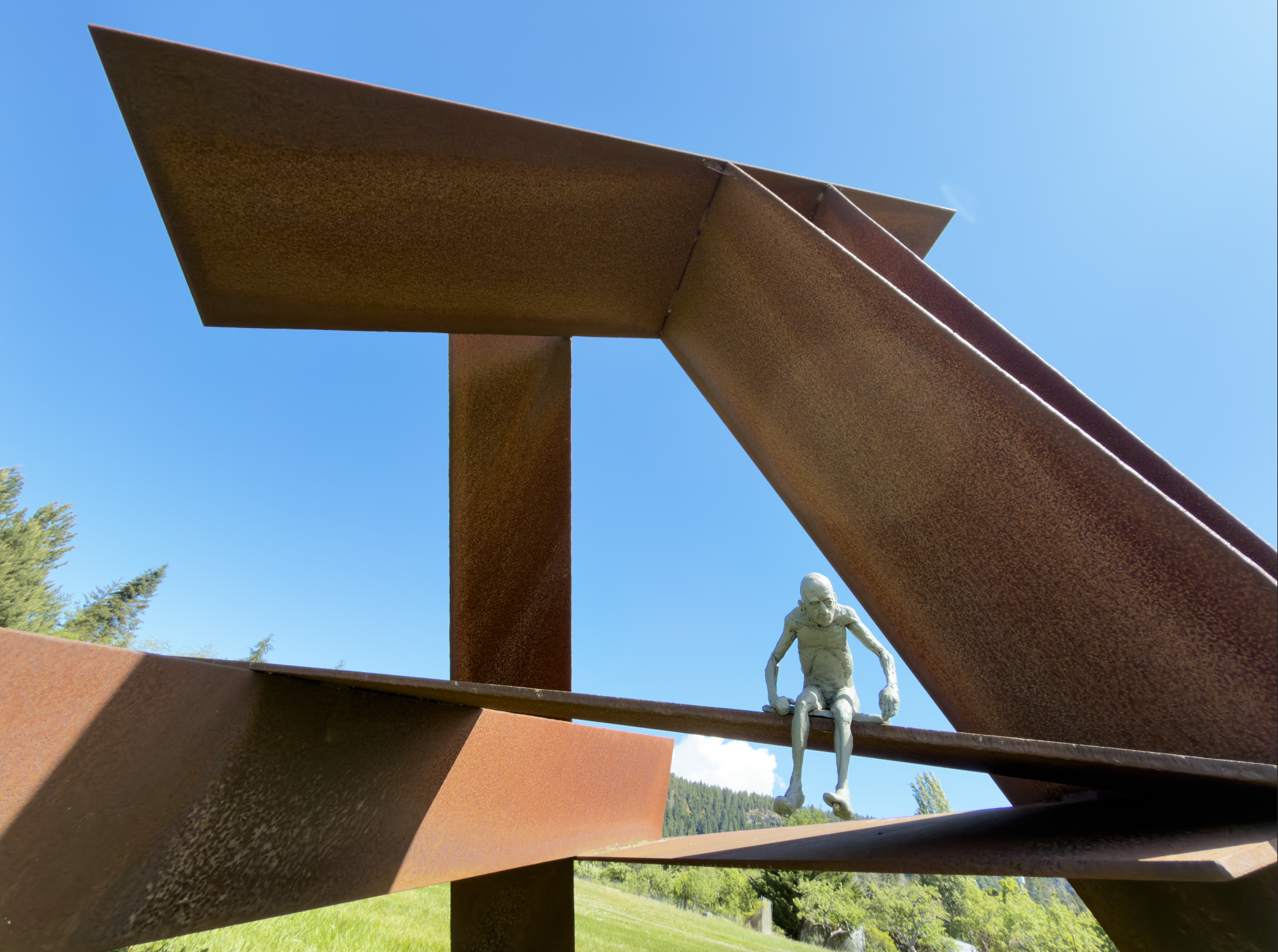
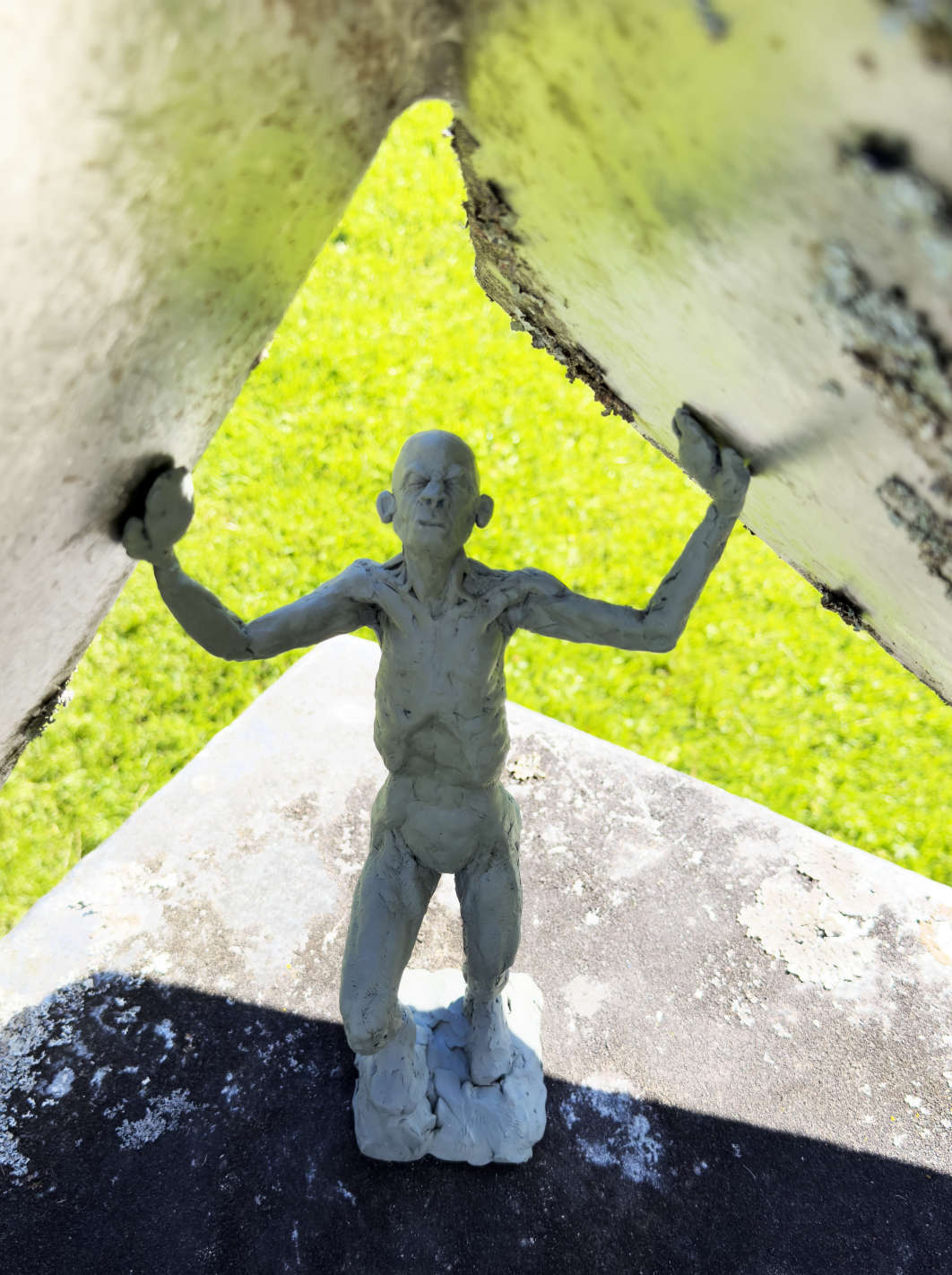
I arrived with seven provisional clay bodies and questions about scale, conscience, and the grotesque body in a technological age. I did not want merely to look at Rubinoff’s sculptures. I wanted to stage encounters: small damaged figures placed against monumental steel, temporary bodies inside another artist’s lifelong project.
The figures were not built to be whole. Their insides were meant to show. Some seemed flayed, opened, reversed, as if the hidden parts of the body had pressed toward the surface. They were not illustrations of illness, but they carried the knowledge of internal life: organs, systems, functions, routines, failures, repairs. I have lived a version of that hiddenness. My disability is real, but much of it is on the inside. The work began by refusing the lie that only visible damage counts.
Before: Seven Figures
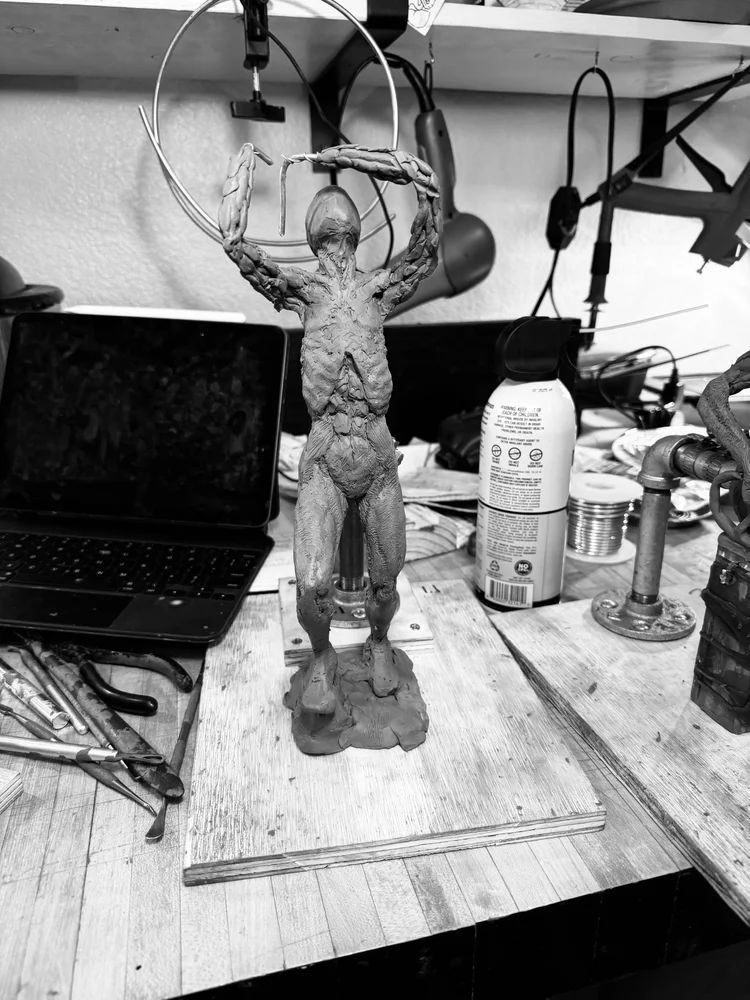
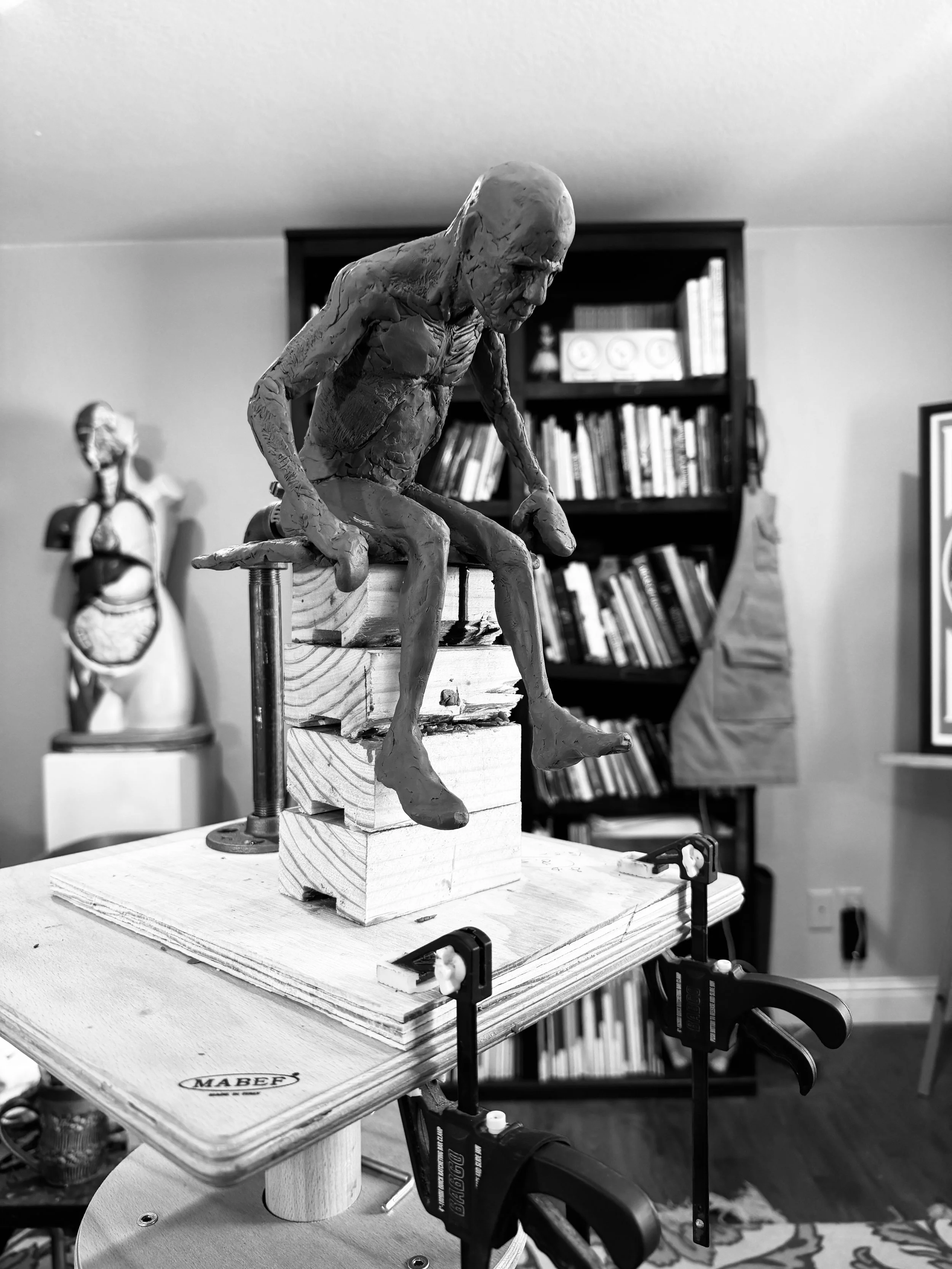
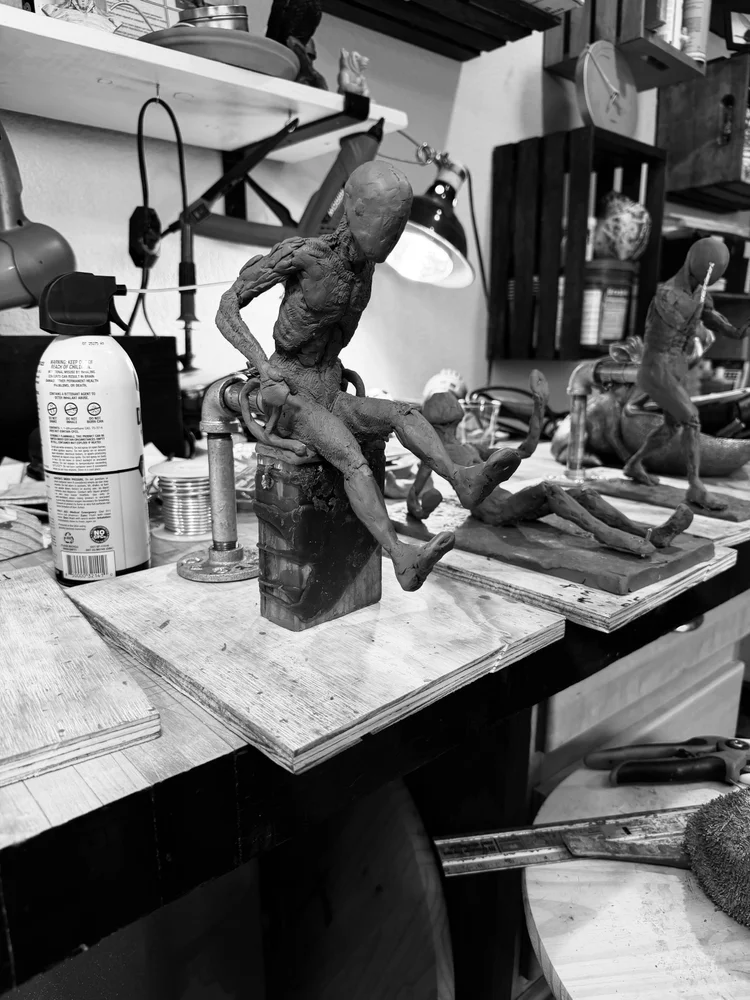
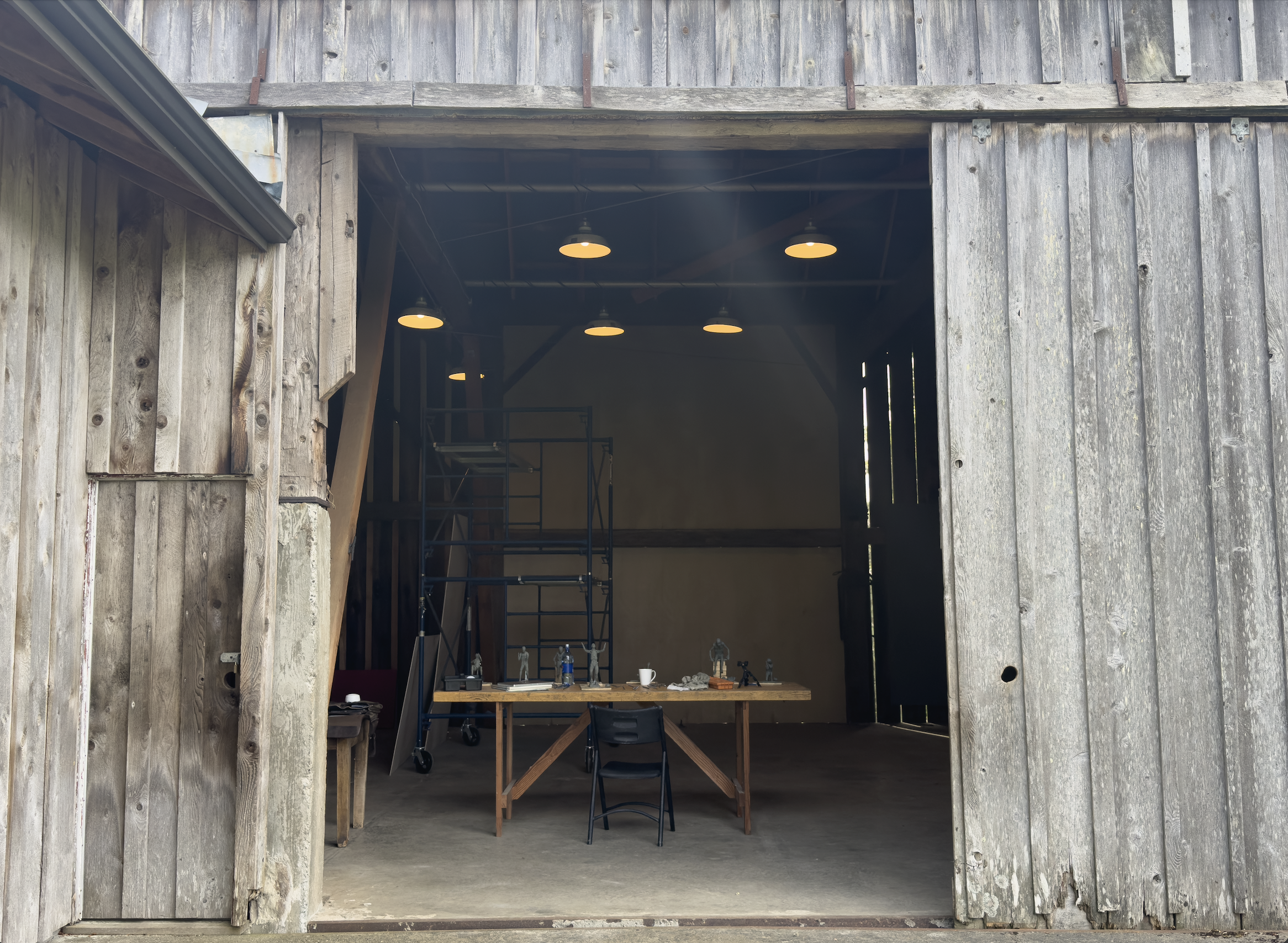
I made seven small figures and packed them as carefully as I could, knowing care would not be enough. They would be broken in transit. Their limbs, backs, arms, faces, and exposed interiors were never going to travel cleanly. They were vulnerable by design. A smoother project would have protected itself better. A more efficient project would have scanned the figures, carried them digitally, simply, solved the problems in advance. But I was not trying to solve problems. I was trying to enter them. The sculptures were not finished pieces. They were small arguments against polish and finish. Their roughness was part of their fragile dignity. Their incompletion made them available to the world.
Broken on Delivery
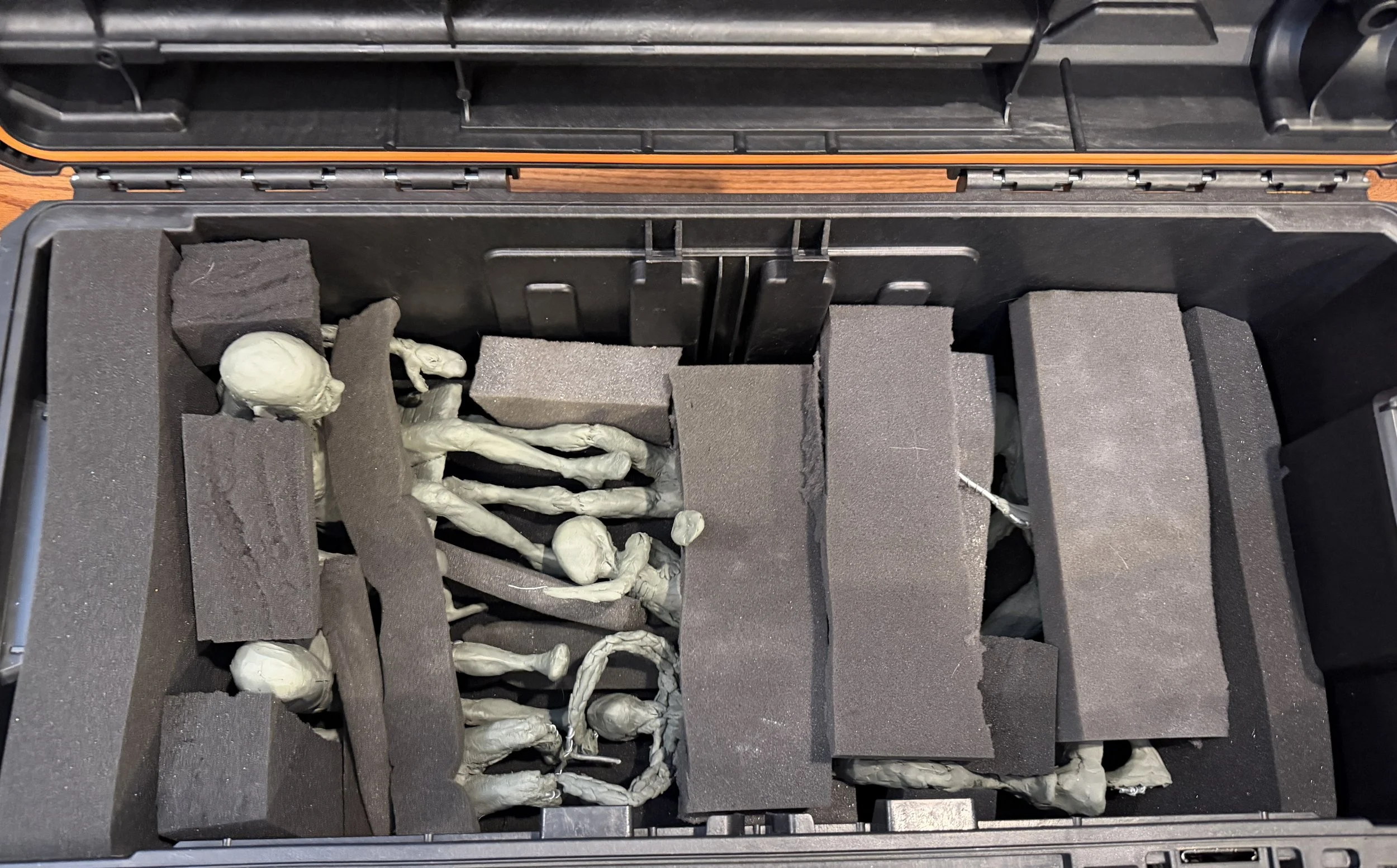
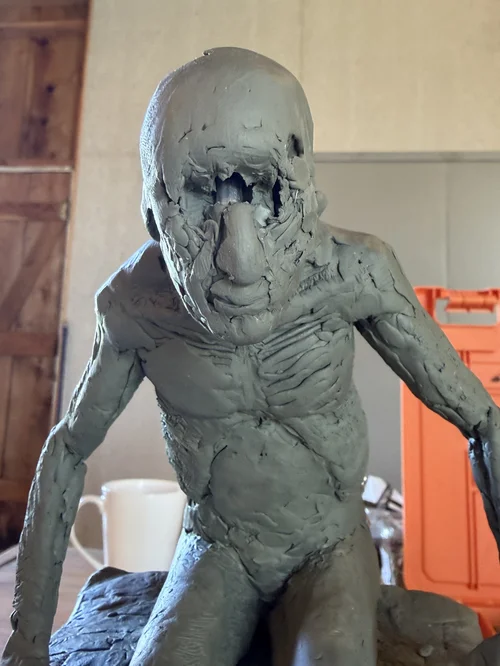
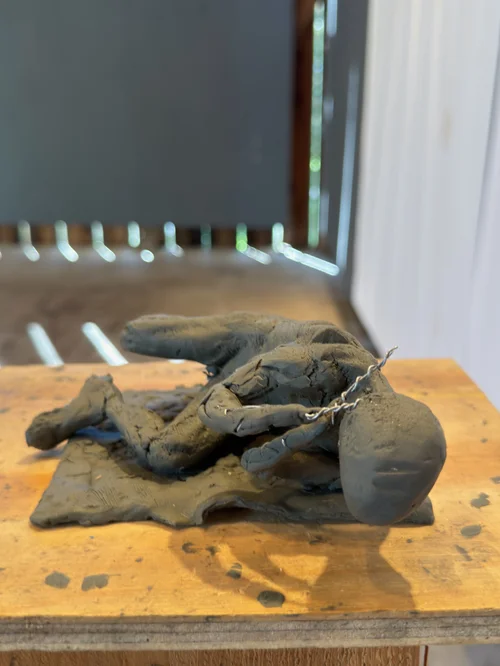
Delivery is not only shipping. Delivery is arrival. Delivery is birth. I was broken on delivery. That sentence is dangerous if it becomes a verdict. I was not a mistake. But I did arrive in a body that required intervention, management, secrecy, adaptation, and above all, repair.
The figures arrived altered too. A dent in the forehead. A leg folded in half. A gesture collapsed into something more than what I planned. Their damage was not romantic. It was annoying, practical, funny, and strangely clarifying.
They had undergone something, and it showed.
Repair As Process
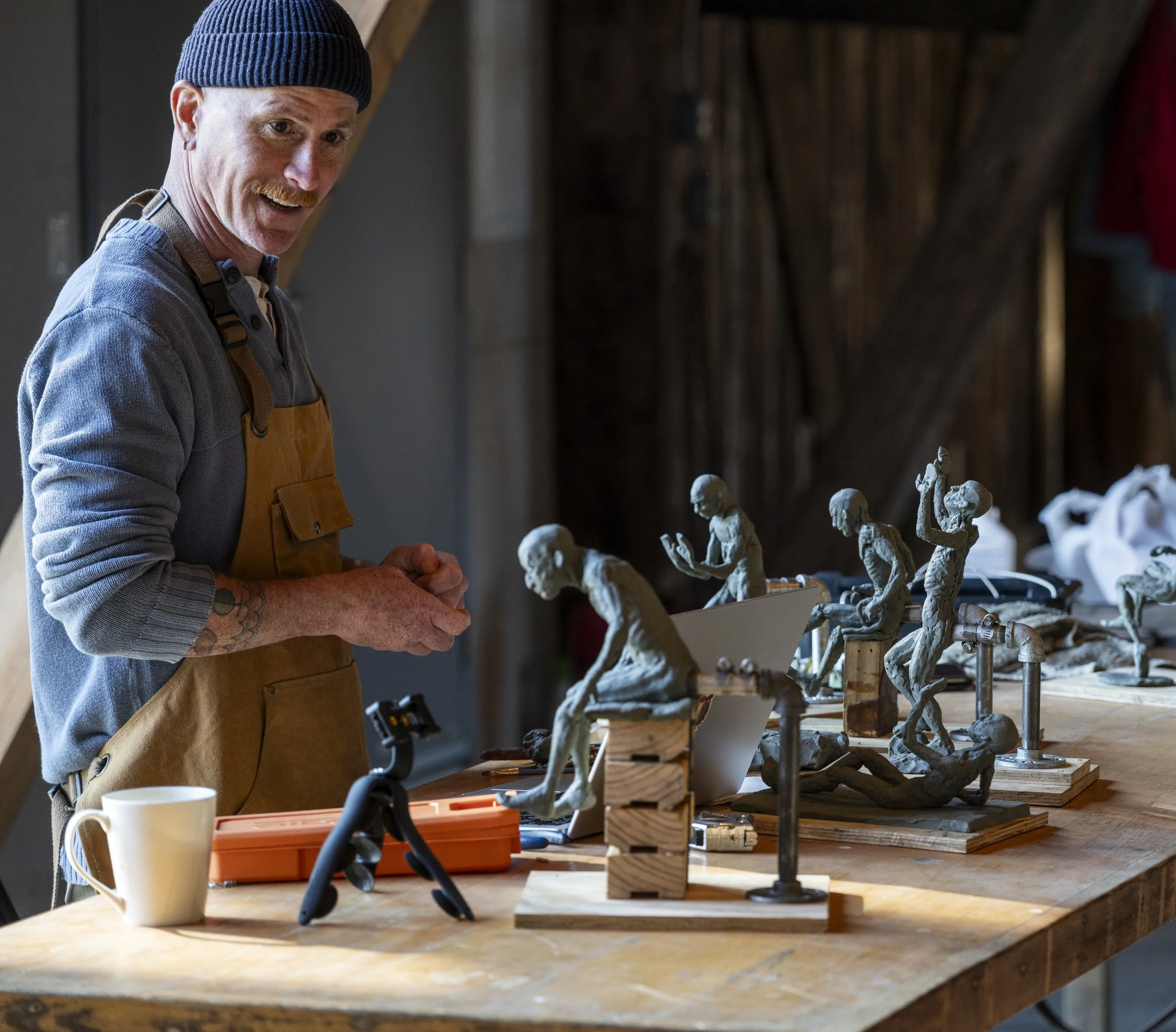
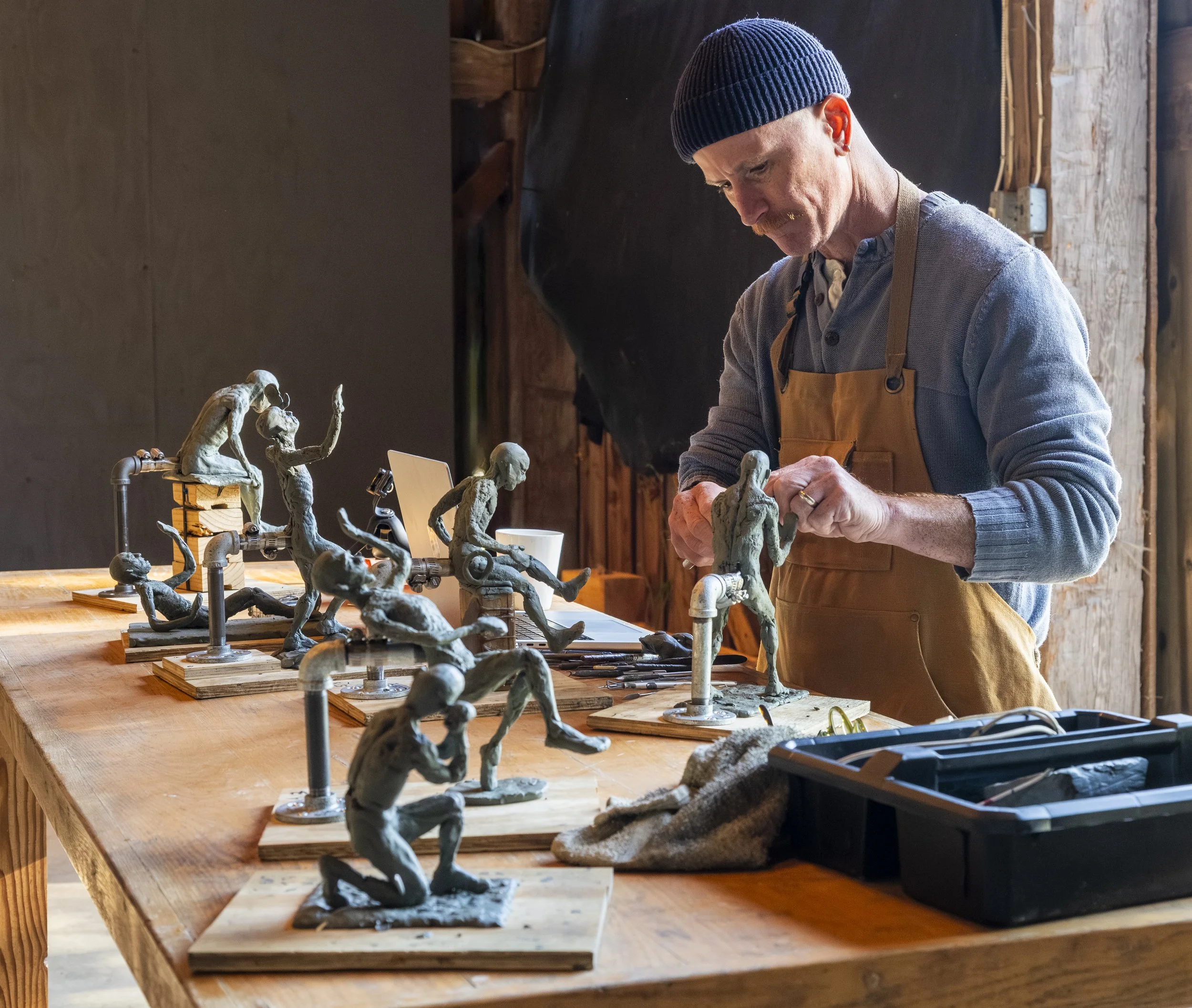
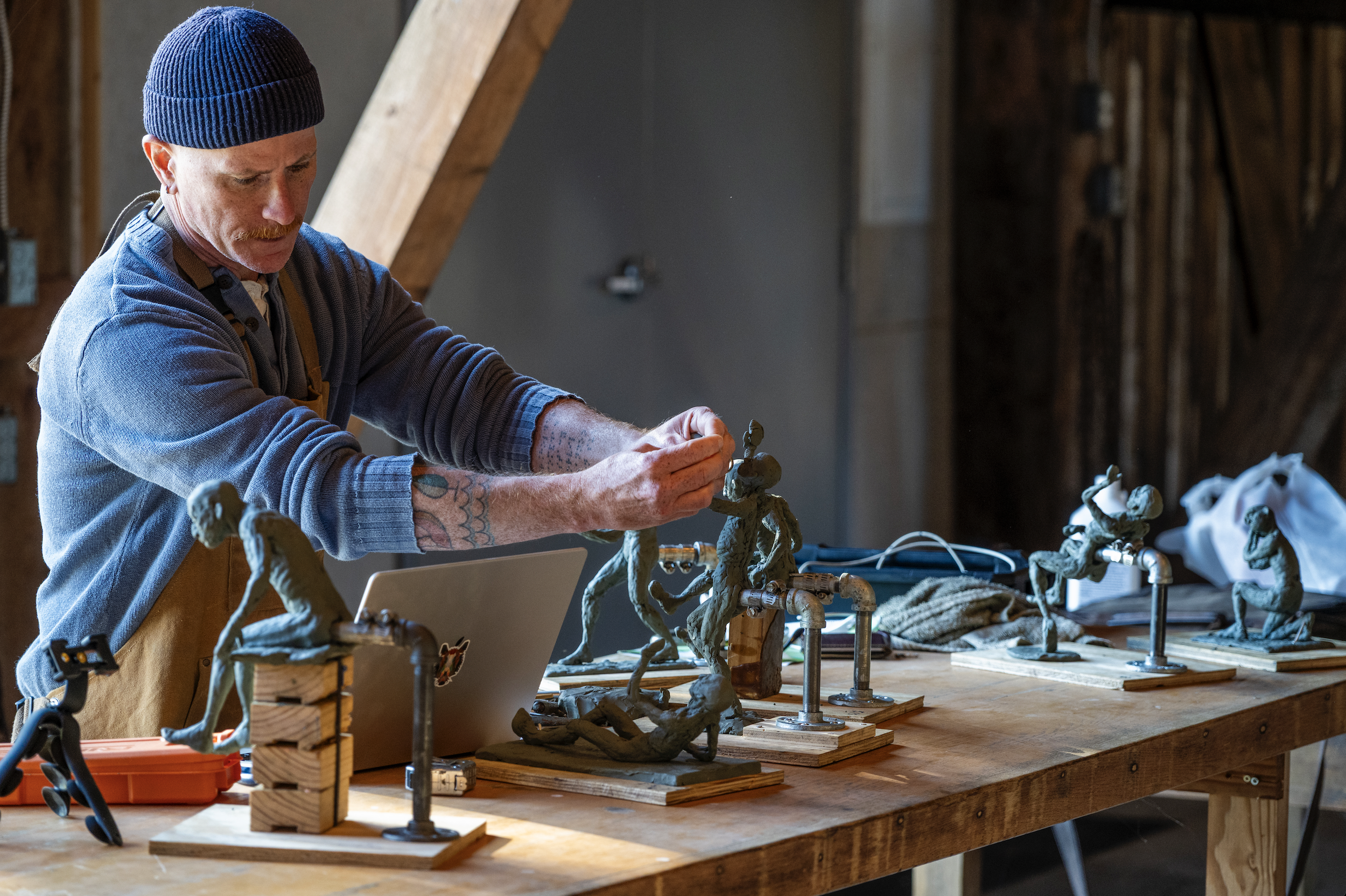
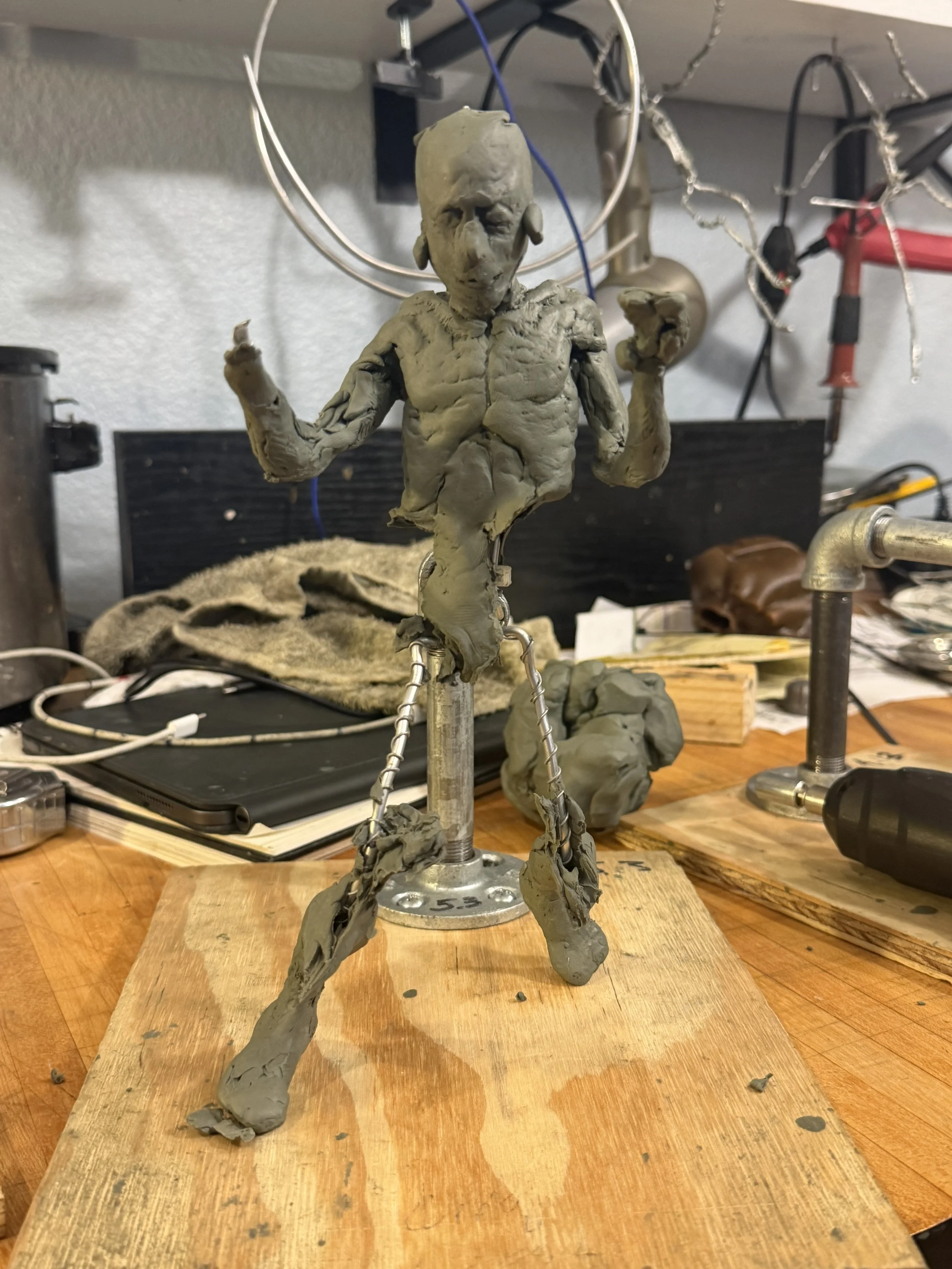
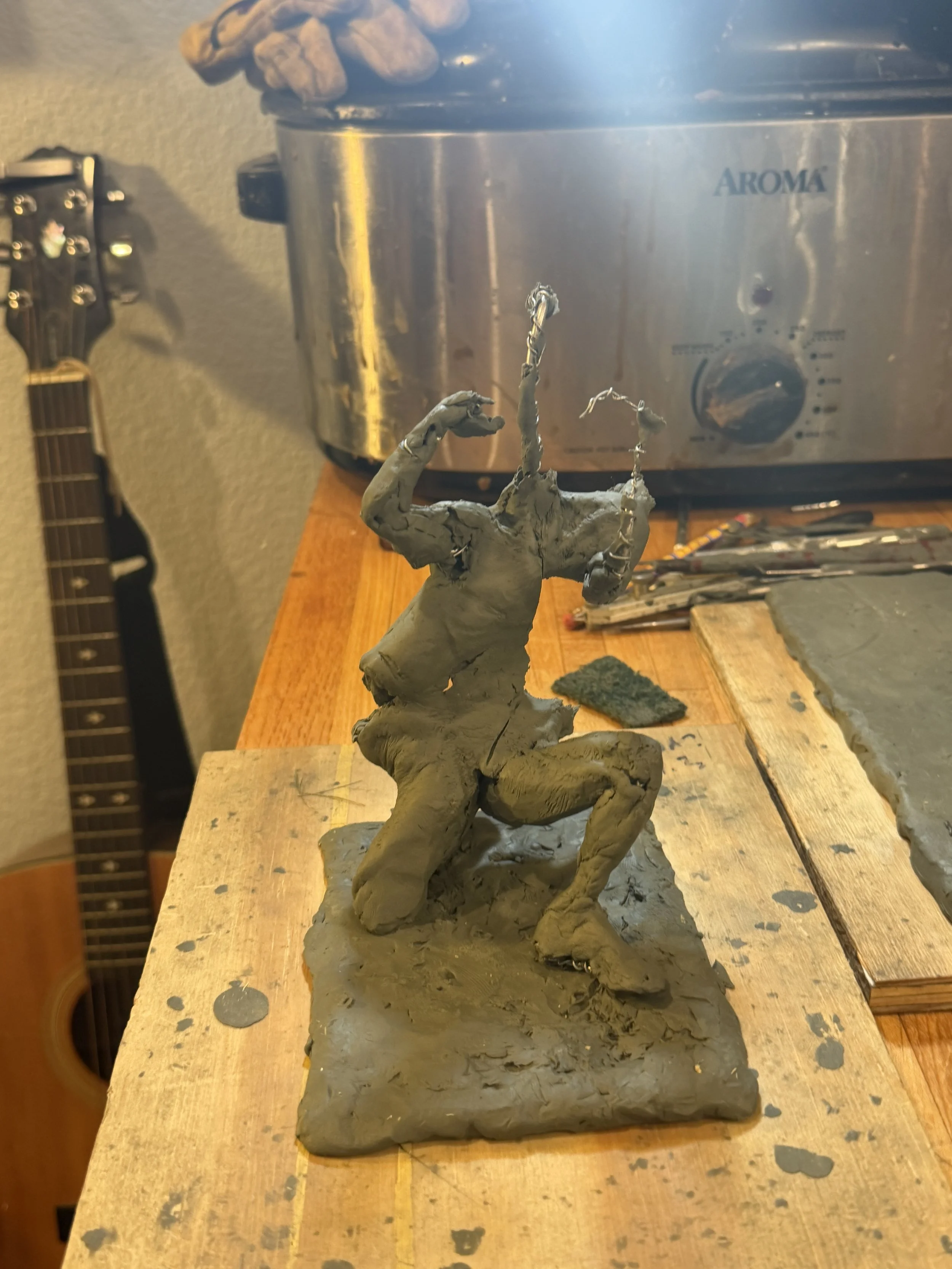
I repaired, altered, strengthened, and complicated the seven figures. I tried to make them stronger without making them too strong, stranger without making them merely decorative, more themselves without pretending I knew exactly what they were.
I was not trying to return them to some original wholeness. There was no original wholeness. There was only the next broken form.
This is true of our bodies too. Bodies are not cured into normalcy. They are managed, negotiated, accompanied, revised. They are lived with. They become livable through routine, attention, embarrassment, humor, discipline, care, and failure.
The work at the bench was not heroic. It was repetitive, bodily, slightly ridiculous. Press the clay here. Cut there. Add support. Remove excess. Let the wound become the structure. Let the mistake become a posture. Let the exposed interior stay exposed.
Imperfection was not an obstacle to overcome. It was the point.
The Encounter
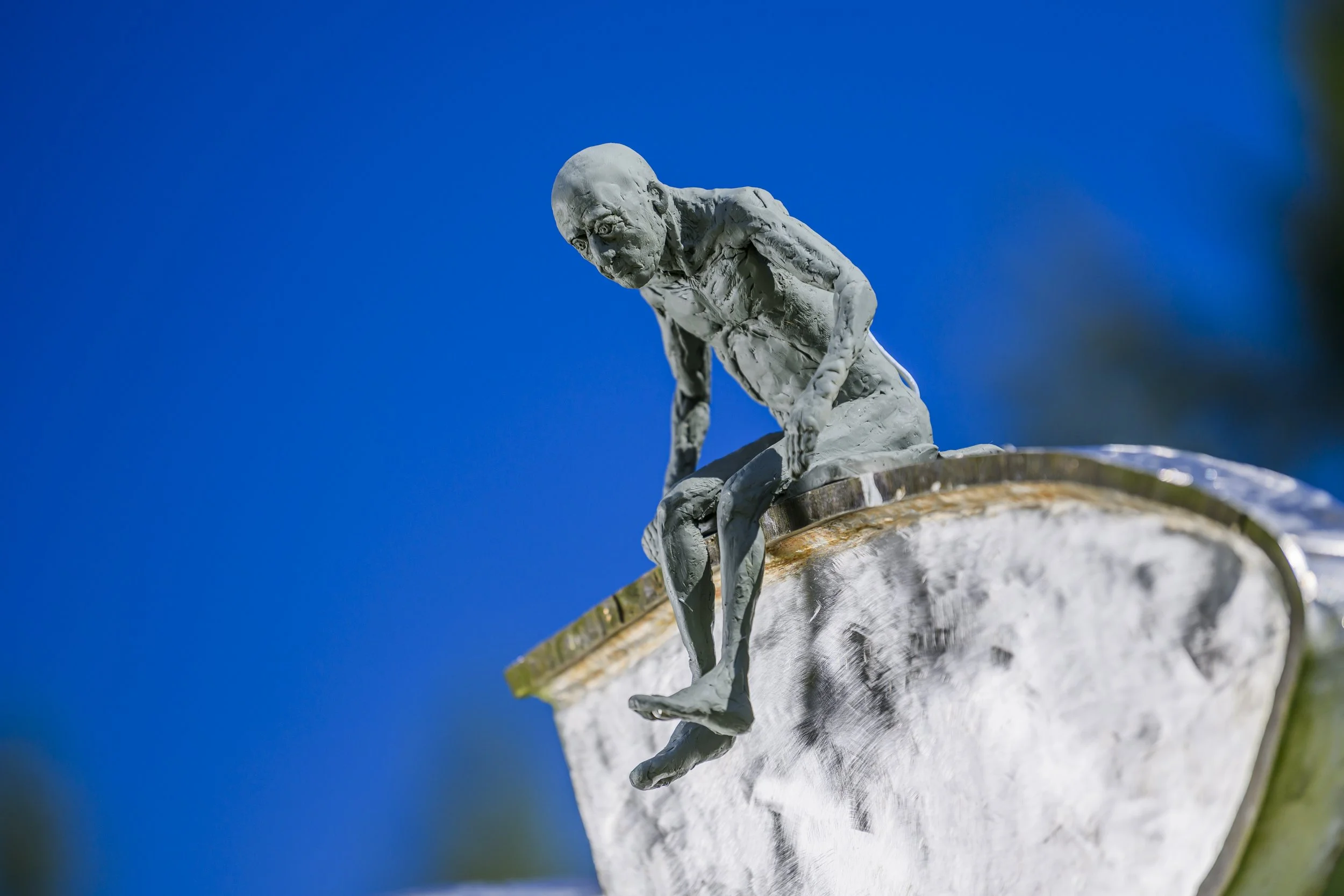
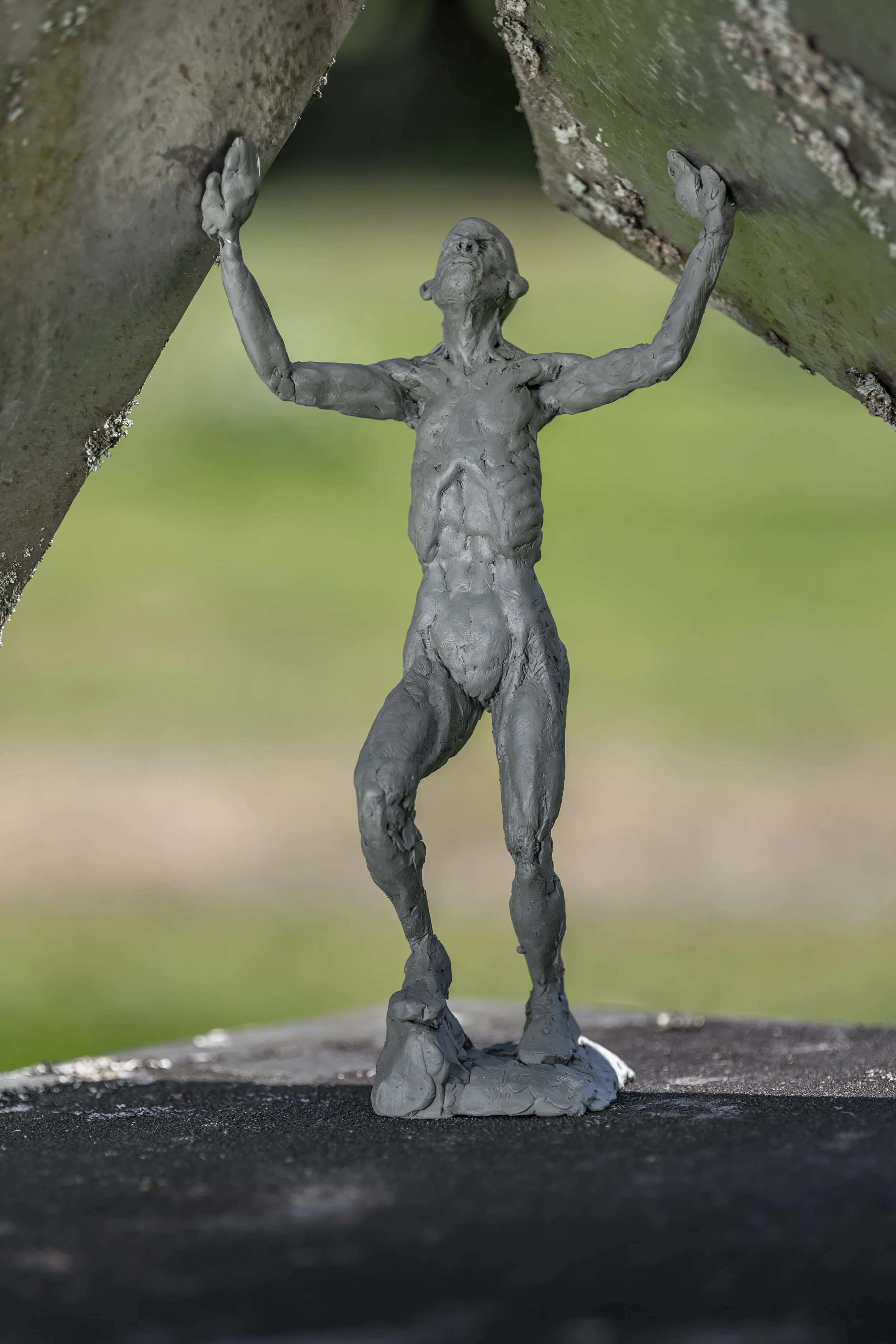
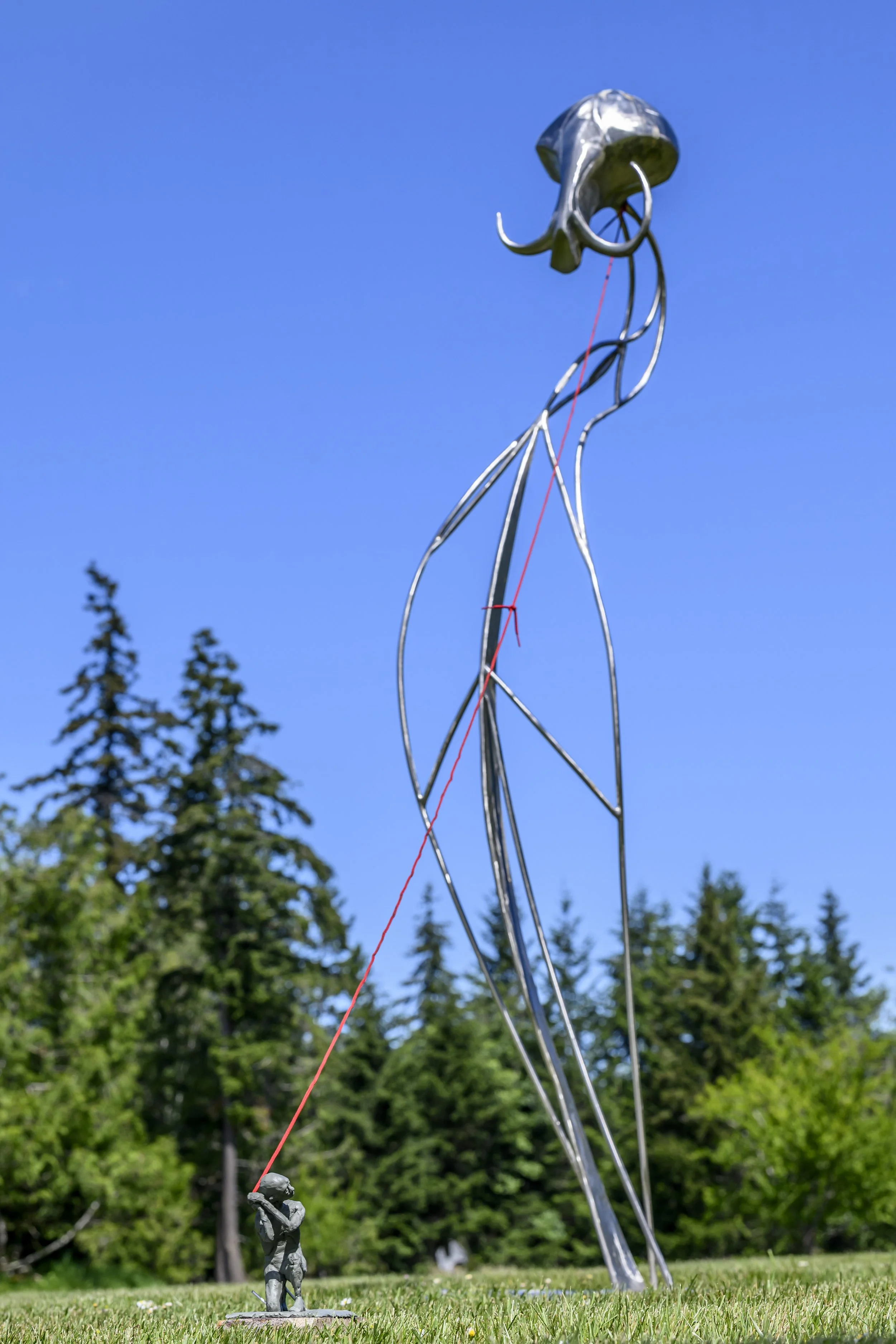
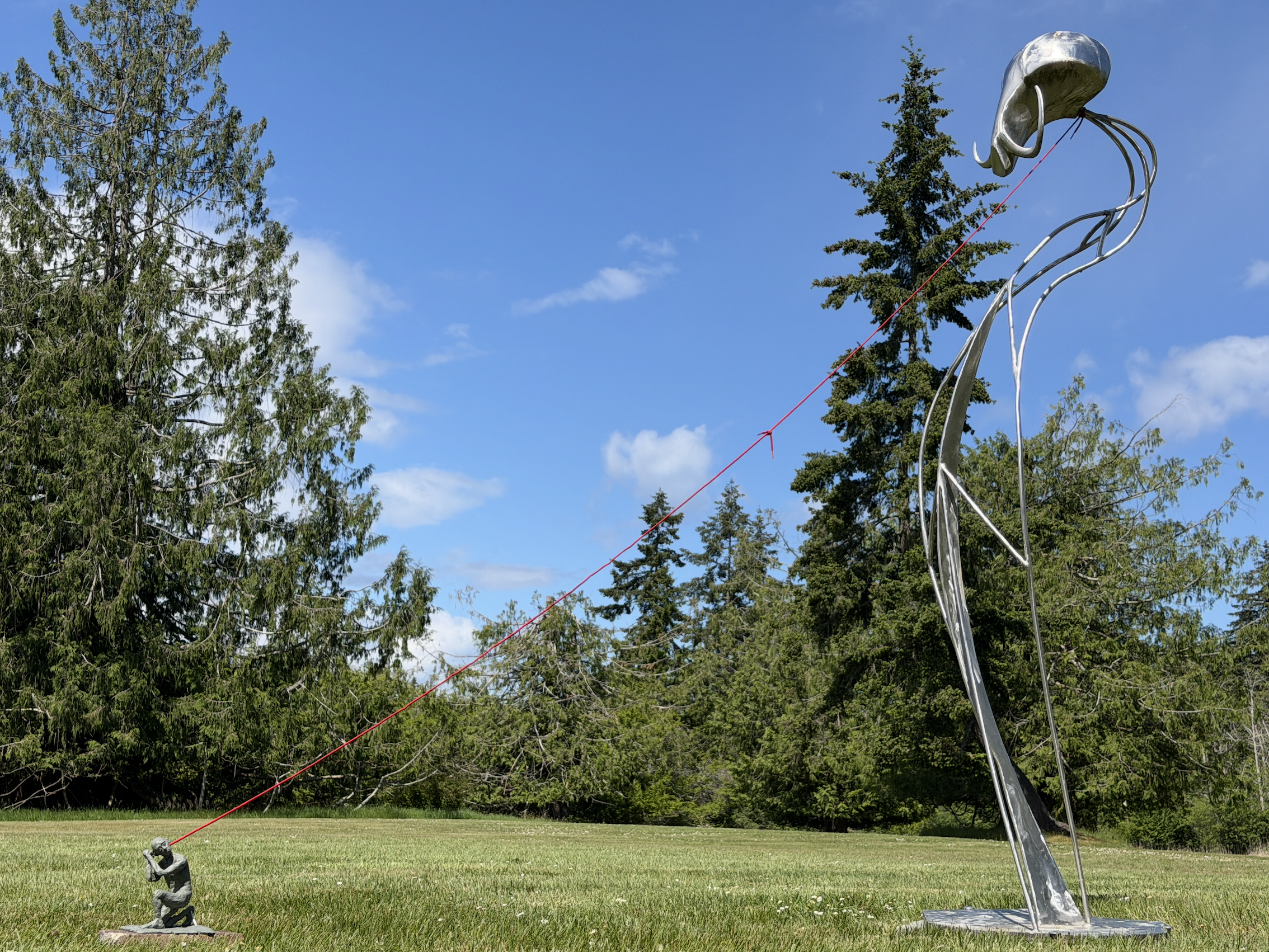
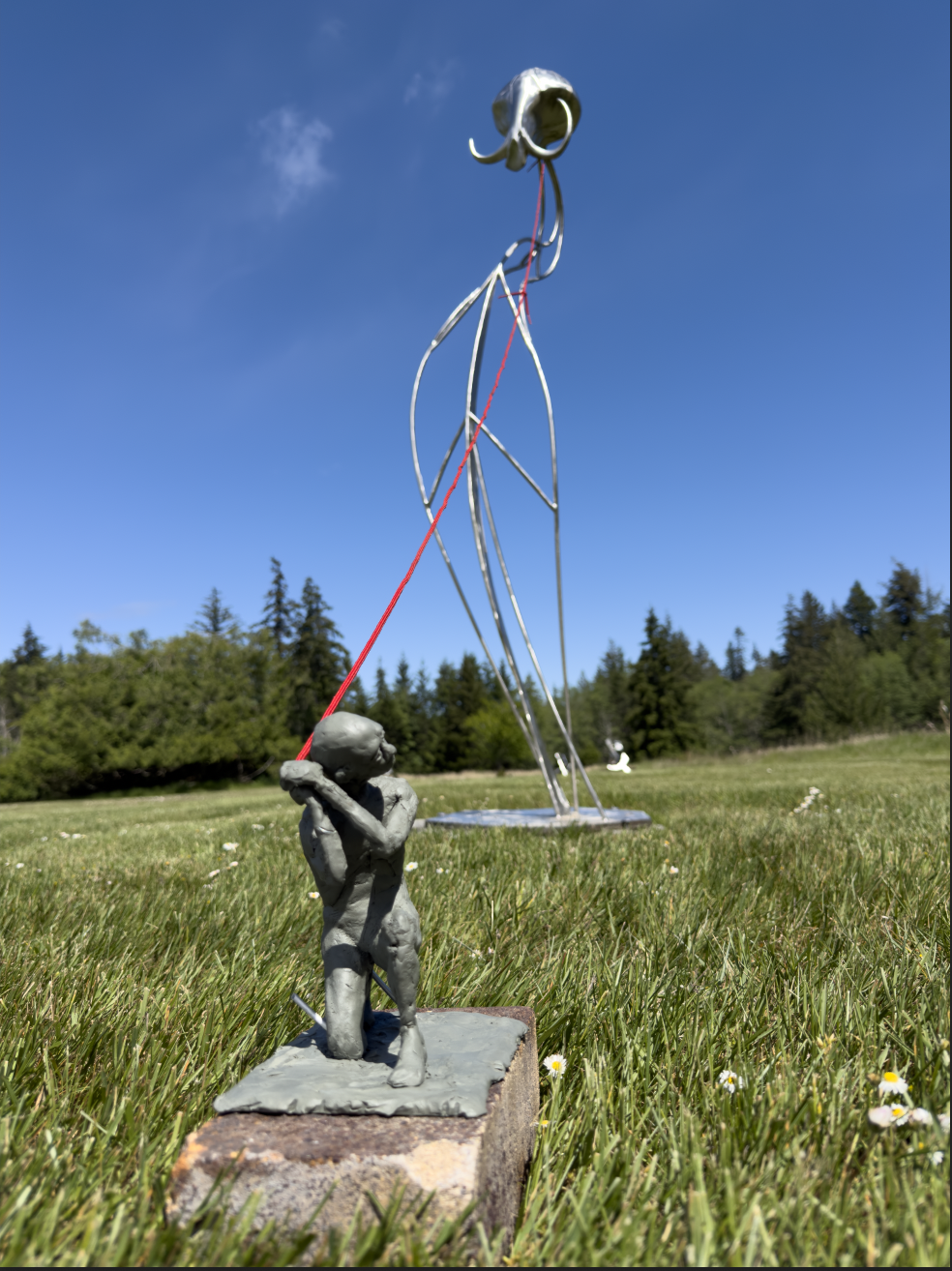
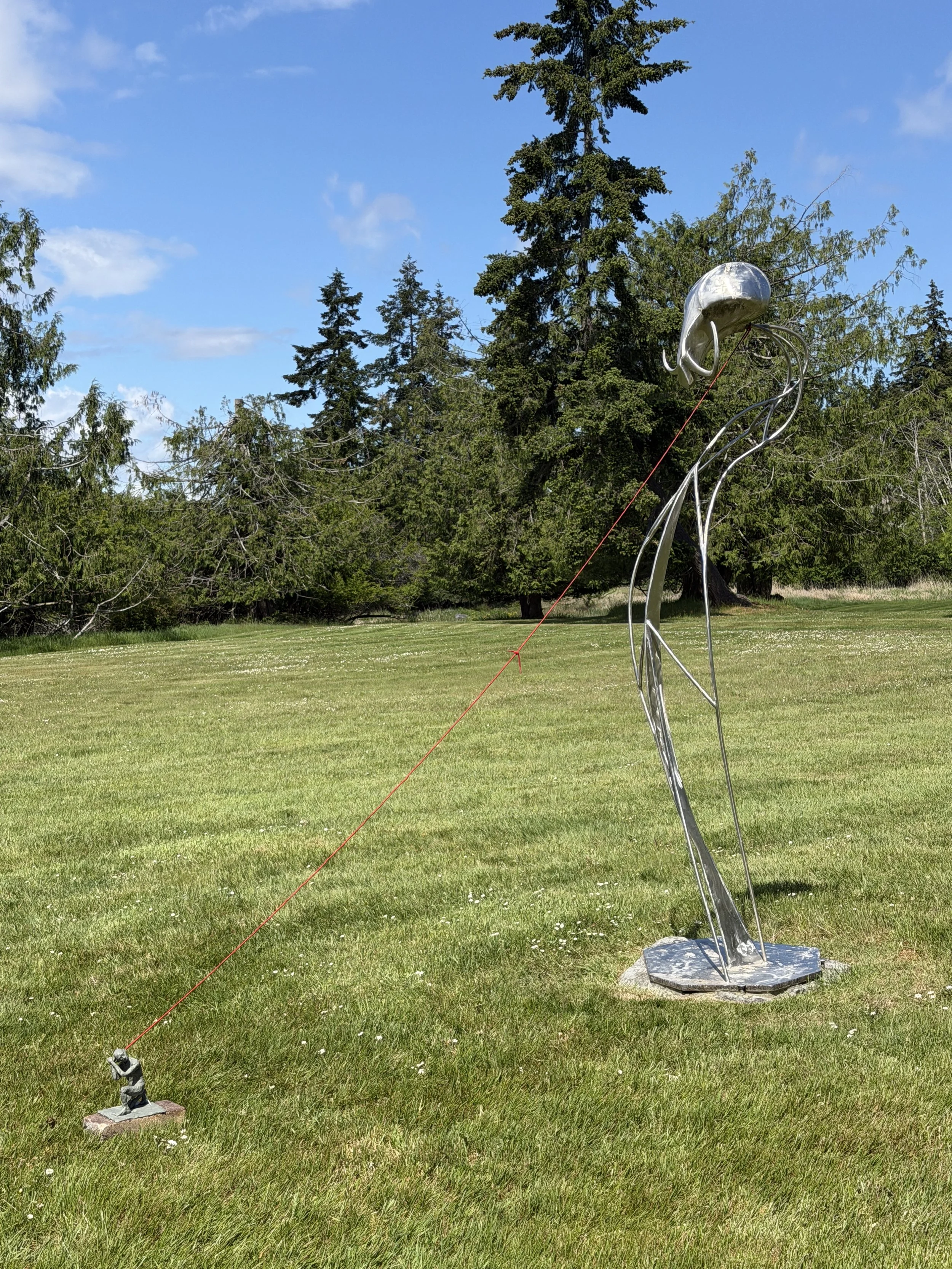
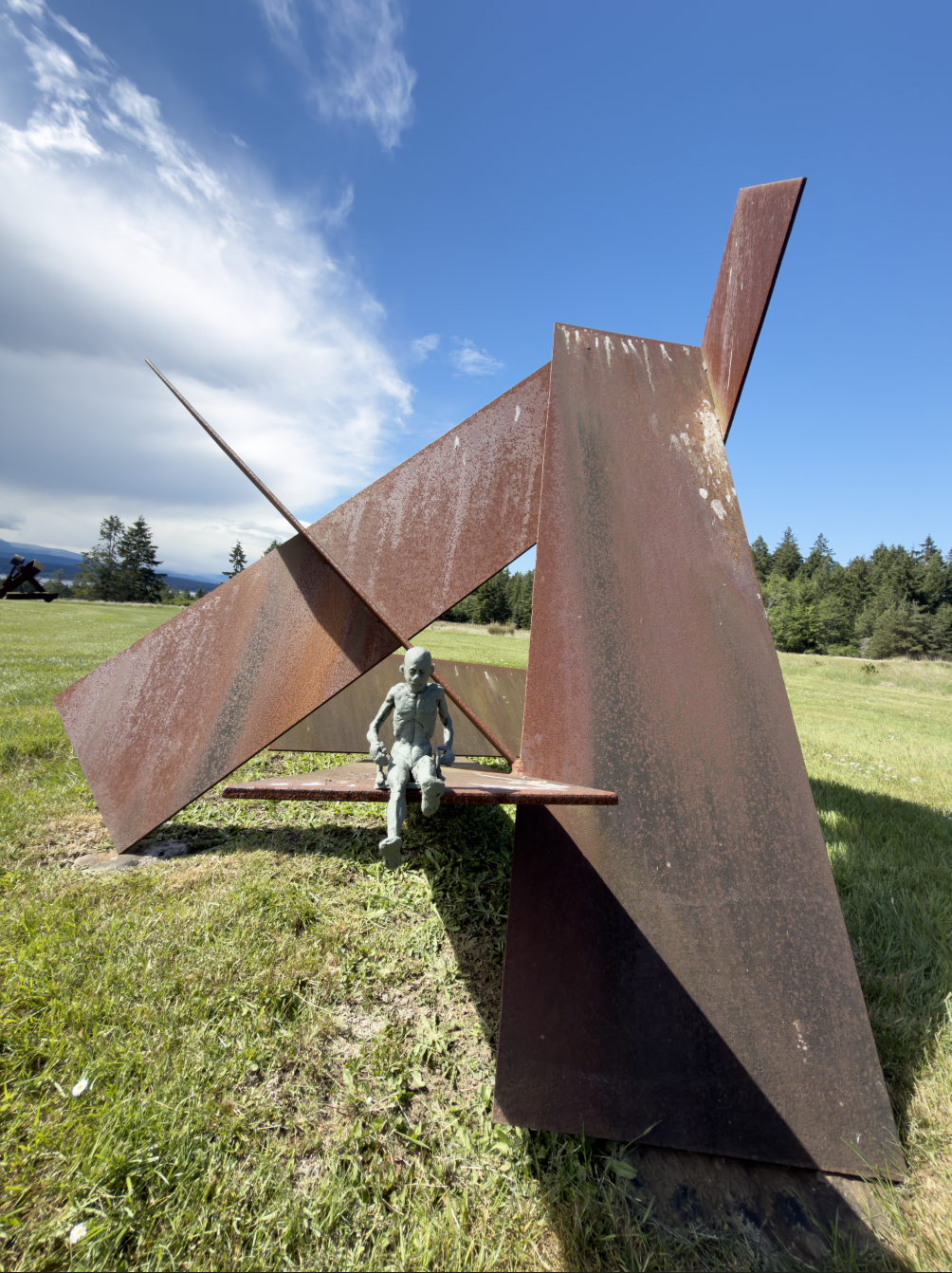
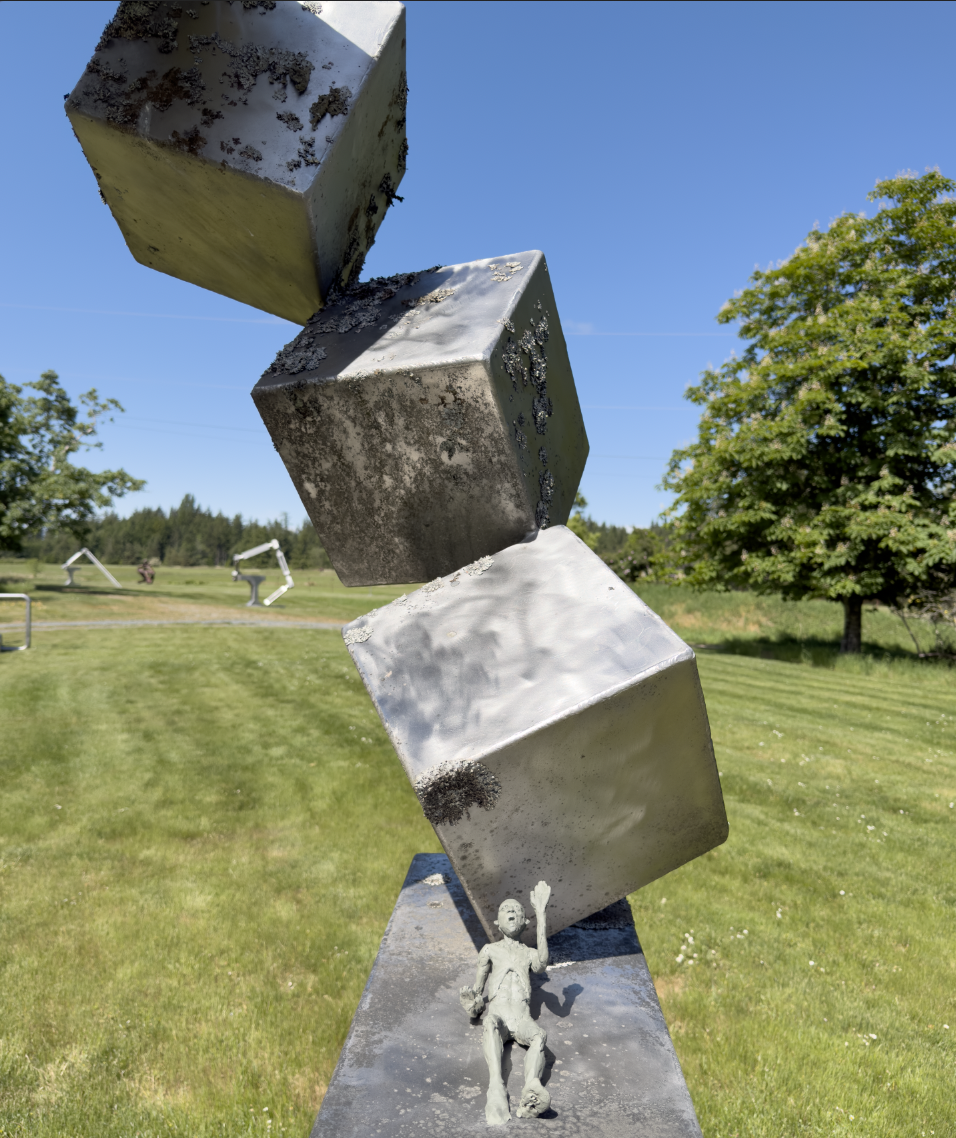
Rubinoff’s sculptures gave the figures scale – disclosed their smallness. They gave them danger. They gave them weather, shadow, and consequence.
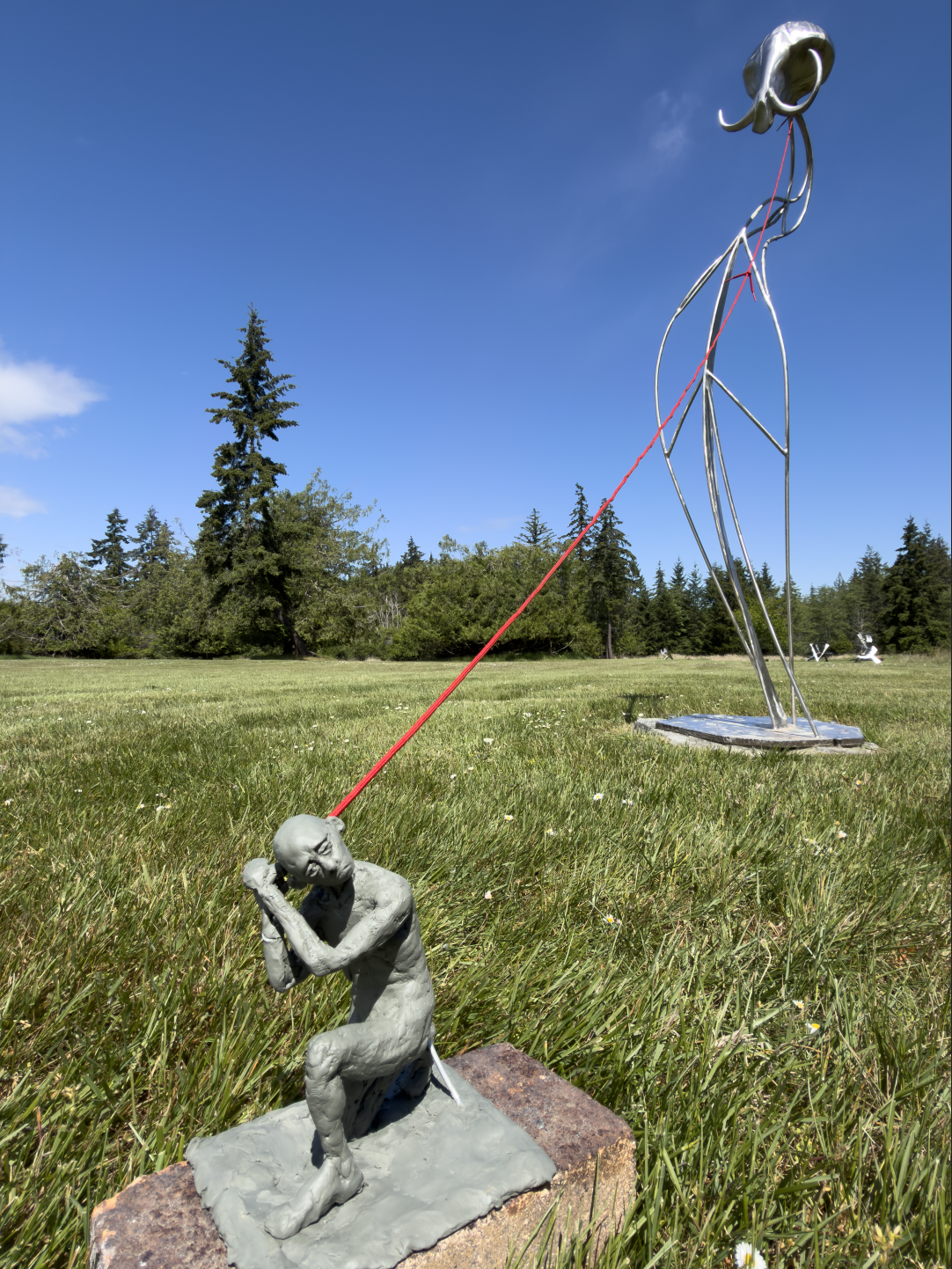
On the workbench, the figures looked unfinished. Against the steel, they looked alive. They did not compete with the Rubinoff’s forms. They couldn't. Their power came from their inadequacy: their frailty, their oddness, their exposed interiors, their inability to stand cleanly inside any familiar category. They approached the sculptures the way vulnerable bodies approach the world – as raw presence.
Today, AI can generate endless images of creatures on sculptures. It can imitate roughness, invent wounds, produce endless variations. But like all algorithms, AI begins with a task. It moves toward output. It needs a defined goal, even if that goal is loose or strange. We, in all our messy humannes, don’t get that clarity. We are delivered into conditions we did not choose and called to make meaning along the way. We play. We fail. We ask why after the fact. We discover the task by undertaking it.
The Red Thread
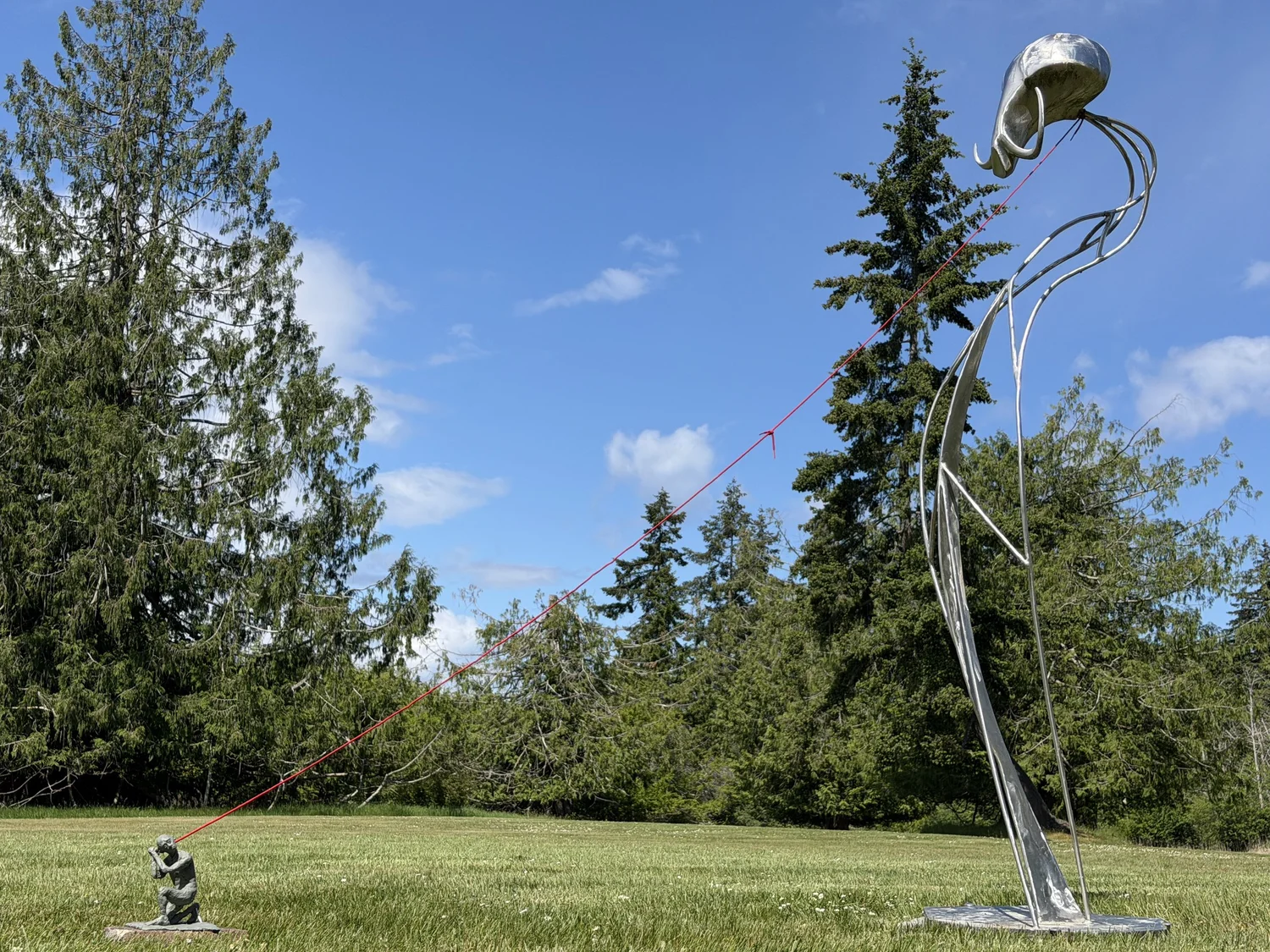
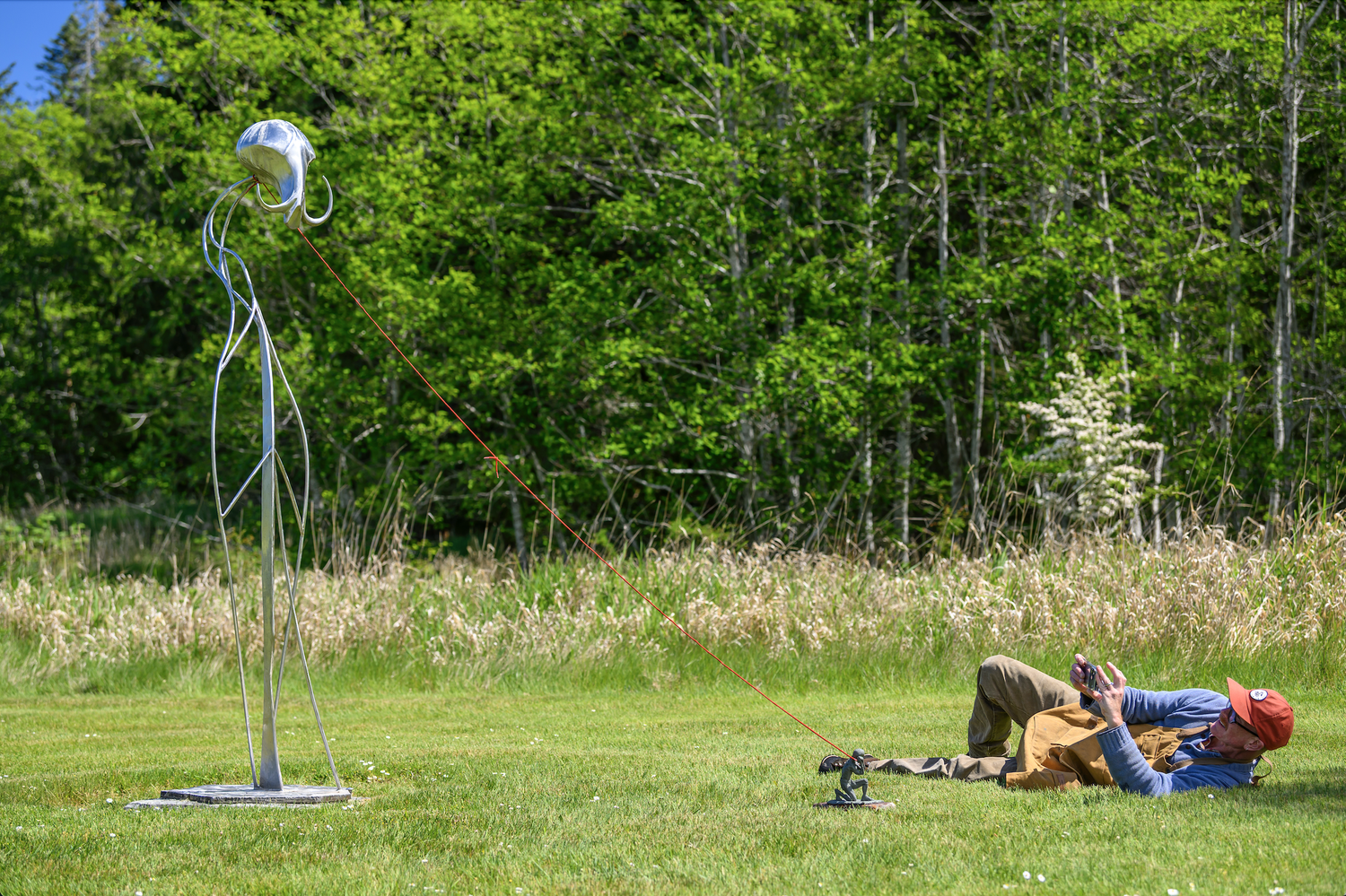
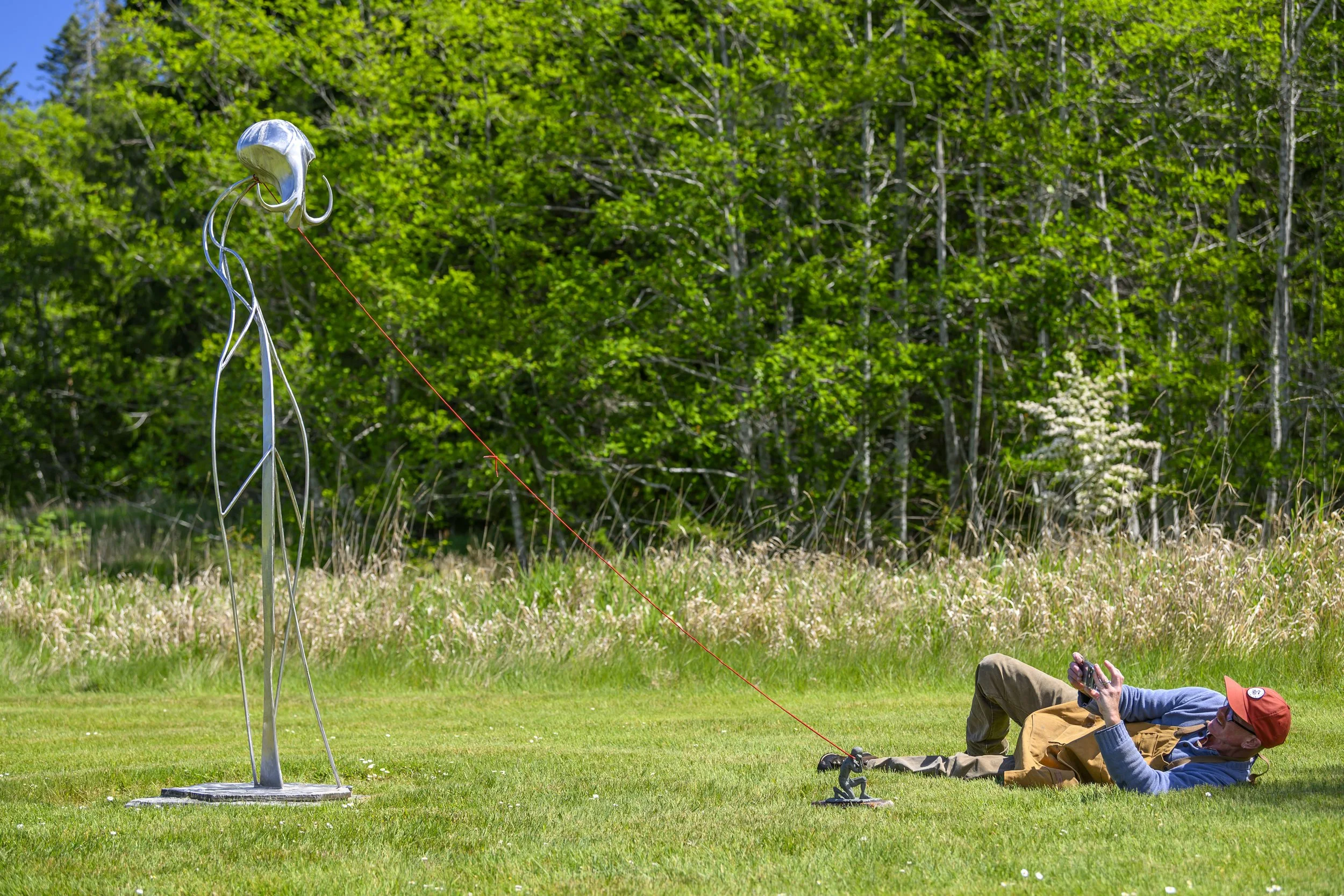
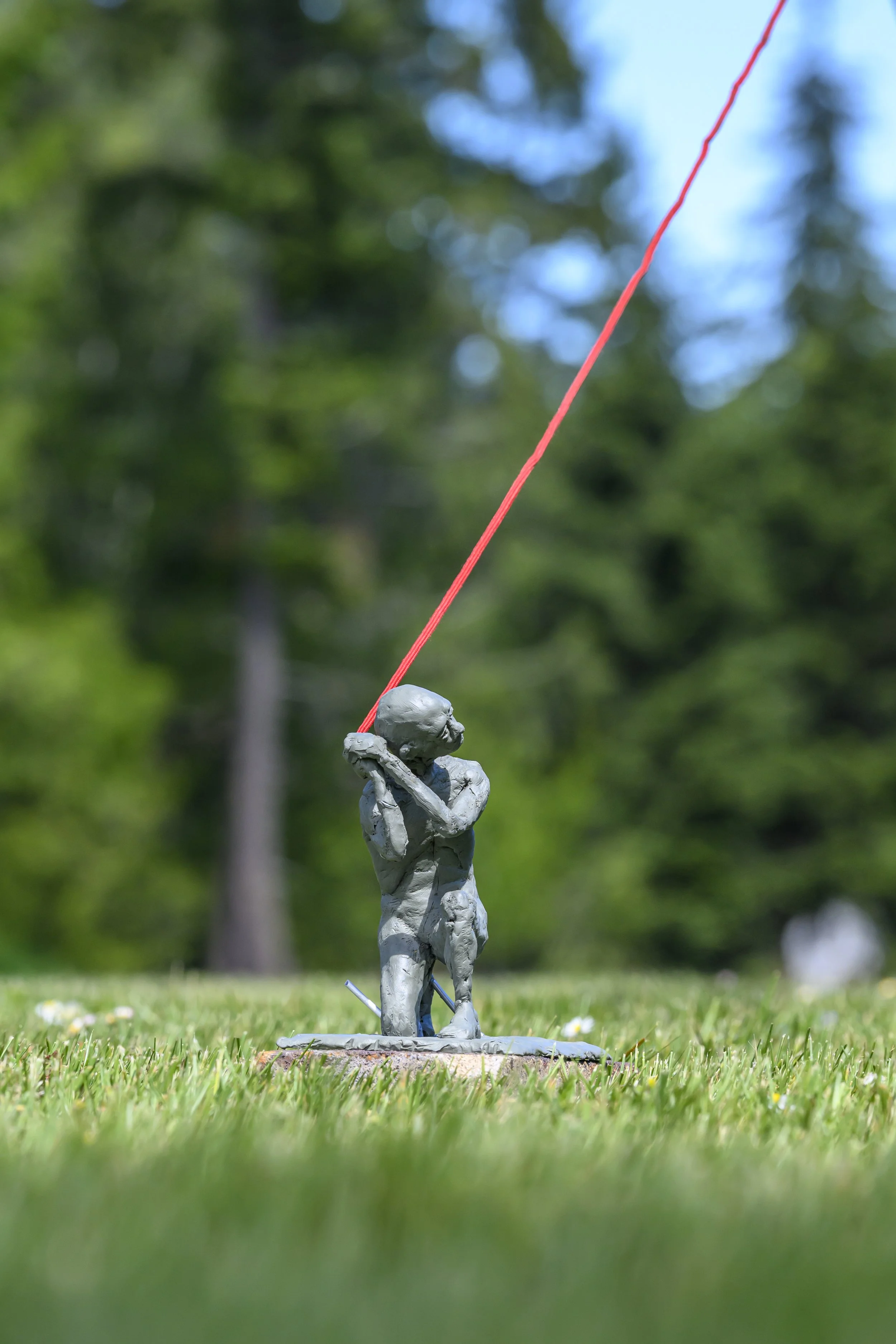
The red thread made the relation visible. It turned distance into tension.
It could be read as leash, lure, umbilical cord, rescue line, or trap. It gave the small figure a way to touch the monumental without mastering it.
The figures were never autonomous. Neither are we. Bodies depend – it’s their ontology. The red thread made dependence visible without reducing it to weakness. It showed relation as pressure. Connection as risk. Contact as both support and exposure.
The red thread is the audacity to carry on - the audacity to rope a giant.
Broken on Return
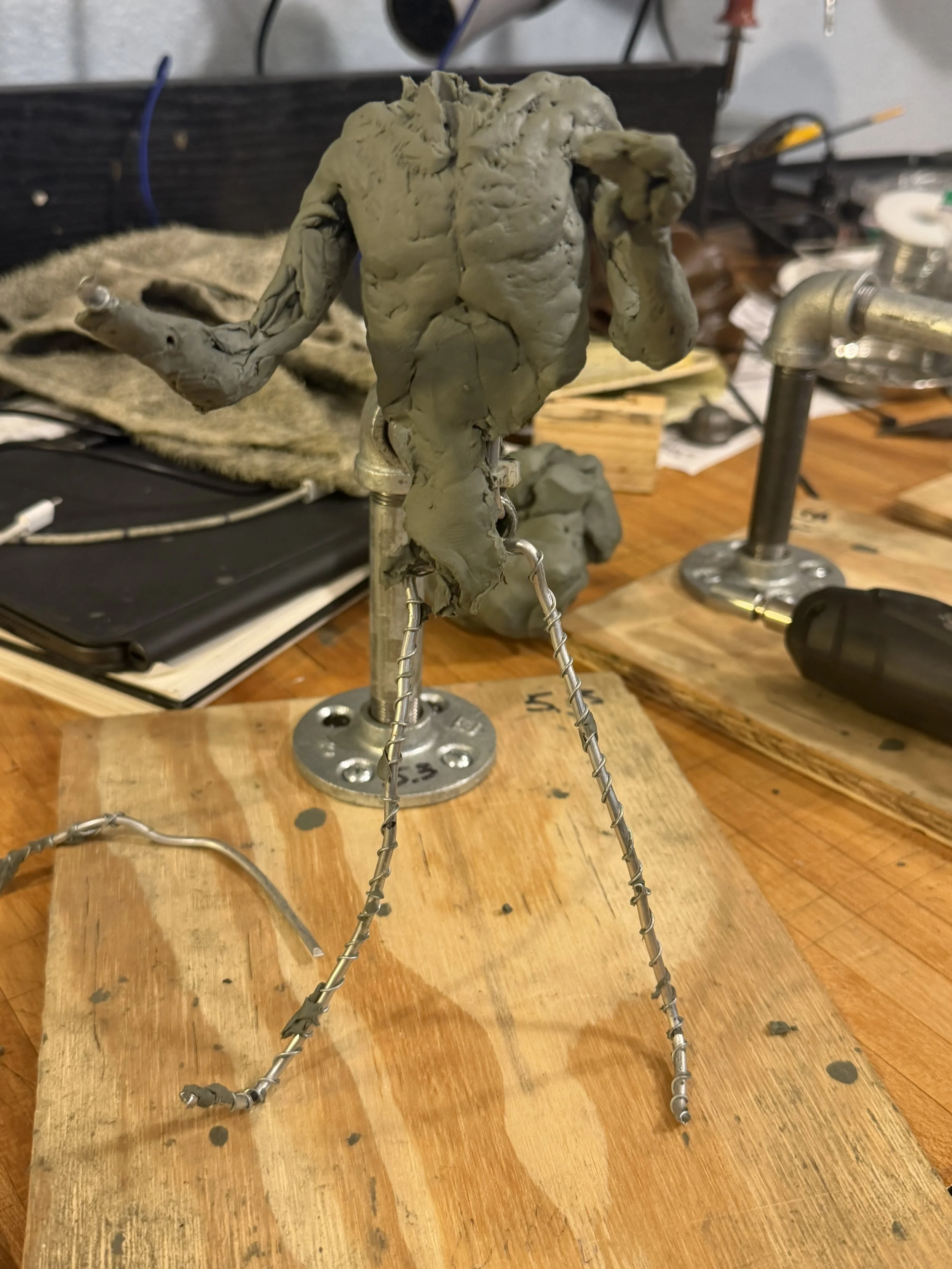
Return is another delivery. The body that comes back is not the body that left. It bears the marks of living.
When I packed the figures to leave Hornby Island, I knew what would happen. They had been repaired, altered, staged, photographed, and made more articulate. Then I put them back and ran them through same system that broke them before.
There is comedy in that. There has to be. Make the figures. Break the figures. Repair the figures. Photograph the figures. Pack the figures. Break them again.
That’s life. We're all broken on delivery in different ways. Some of us visibly, some invisibly, some privately, some embarrasingly publicly. And all of us are broken on return. The body that carries us through the world eventually gives way. This is not an argument for despair. It is an argument against pretending.
The point was never to arrive whole. The point was to arrive, work, play, repair, risk, and return – leaving behind the record of a broken body.
Afterlife: What Remains
The clay figures were temporary. The placements were temporary. Everything is temporary. Even Rubinoff's brilliant works in metal and meaning are temporary.
The documentation is not merely evidence that the work occurred. It’s how the work continues to occur.
The documentation does not preserve the whole event. It cannot hold the tiredness, the weather, the awkwardness of carrying small clay bodies through airports and a sculpture park, the little panic of breakage, the pleasure of a placement that worked. Documentation cannot hold the private knowledge that some forms survive only by changing – and some didn’t survive at all.
But they all held something. They held the interval between breakage and return. They held the play. They held the refusal to make damage either shameful or inspirational. They held the possibility that a broken form can become more than its damage without needing to become seamless.
That is where the work lives now. In the seam and stitch. In the record. In the questions still moving through bodies broken on delivery / broken on return.
for the space, the work, and the witness.
Sage Elwell, 2026